The Litmus Test of Champions
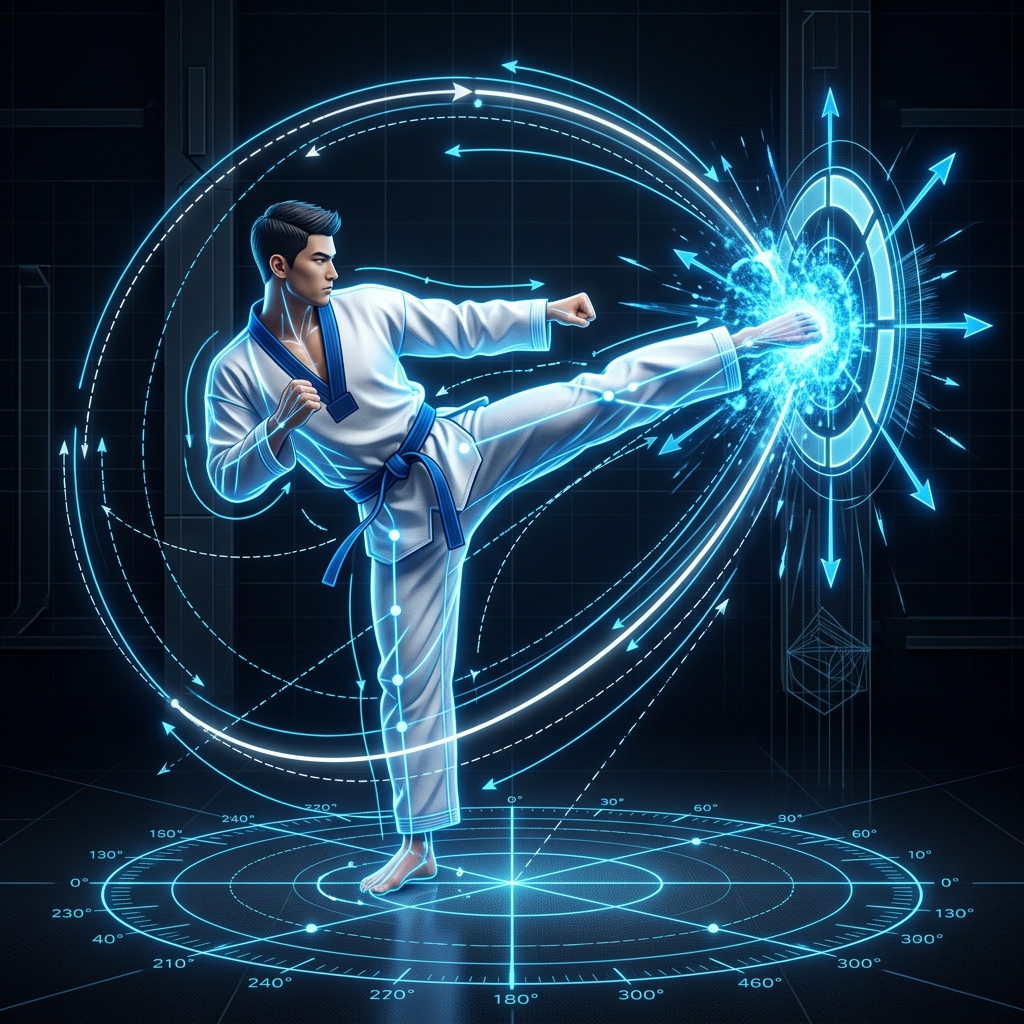
In the world of Recognized Poomsae, judges look for one singular movement to instantly determine an athlete's caliber: The Yop Chagi (Side Kick). It appears heavily in advanced patterns like Keumgang, Taebaek, and Pyongwon. A flawless slow-motion side kick requires a harmony of flexibility, isometric strength, and skeletal alignment that takes years to master.
"Anyone can throw a fast roundhouse. A slow, highly-chambered, perfectly locked side kick held for three seconds separates the masters from the students."
The Four Phases of the Ultimate Yop Chagi
A deduct-free side kick under WT rules is rigorously scrutinized across four distinct biomechanical phases.
- Phase 1: The Chamber (Folding): The knee must be pulled aggressively into the chest, not just lifted to the side. Crucially, the heel of the kicking foot must point directly at the target before the extension begins. A lazy chamber indicating a "roundhouse-side-kick hybrid" is an immediate 0.3 technical deduction.
- Phase 2: The Extension (Thrust): The kick must travel in a straight line from the chamber to the target. It is a pushing motion, not a swinging motion. The hip must roll entirely over, aligning the shoulder, hip, and heel on a single horizontal plane.
- Phase 3: The Lock-out (Impact): At maximum extension, the foot shape is critical. The "Balnal" (foot sword) must be formed—toes pulled back violently, ankle angled downward. The supporting foot must pivot nearly 180 degrees away from the target to allow the hips to fully open.
- Phase 4: The Recovery (Re-chamber): After the impact, the leg cannot simply drop to the floor. It must snap back to the tight, original chamber position before being placed down softly.
Training the Yop Chagi
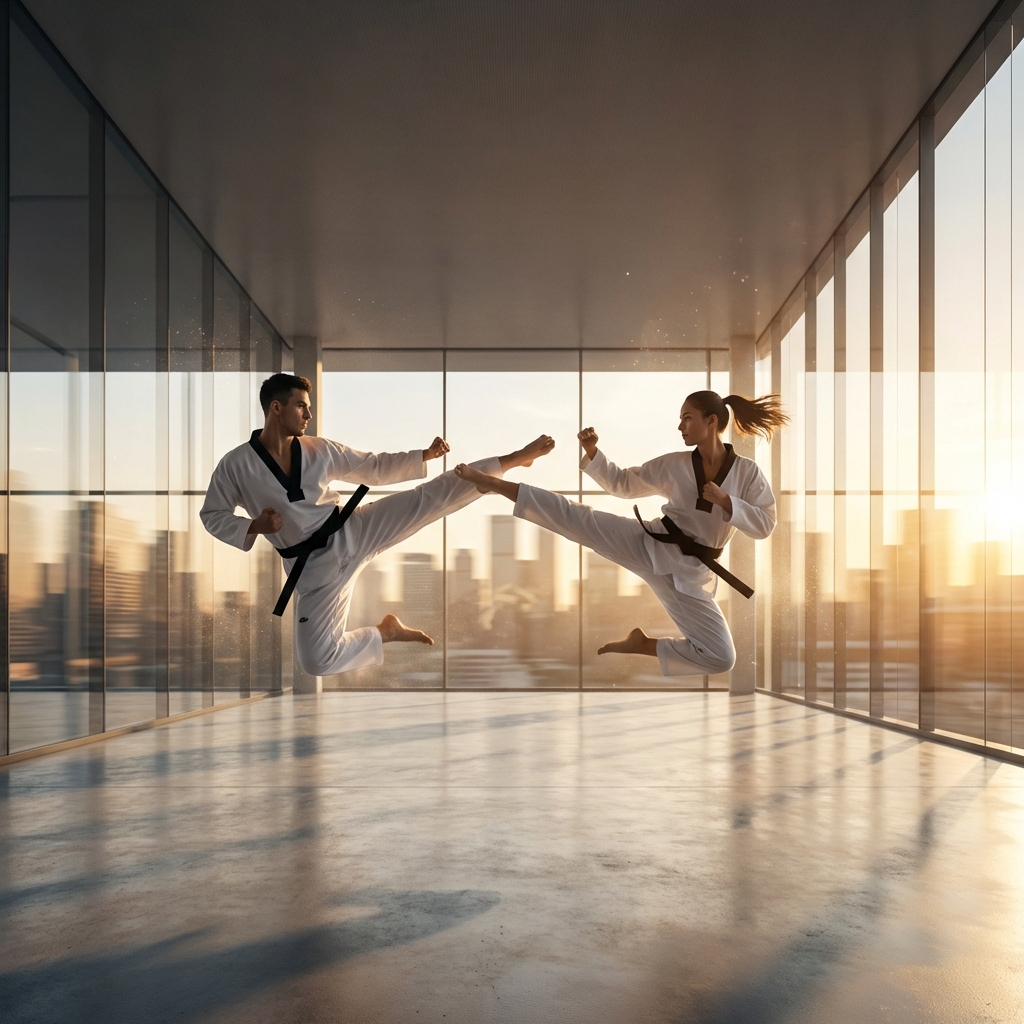
Passive stretching (the splits) is insufficient for a Poomsae side kick. The leg must be lifted and held by muscle, not momentum.
Athletes must engage in rigorous isometric hold training. A standard drill is the "Wall Hold"—leaning sideways against a wall, lifting the leg into a perfect locked side kick at head height, and holding it for 60 seconds without dropping a millimeter. This agonizing exercise builds the gluteus medius and hip flexor strength required for the slow-motion kicks in patterns like Pyongwon.
Conclusion
The Yop Chagi is brutal, punishing, and beautiful. It is the ultimate expression of control over one's own body. Mastering the biomechanics of this single kick will drastically elevate an athlete's entire Poomsae repertoire.
Tactical Debrief
Share your operational insights