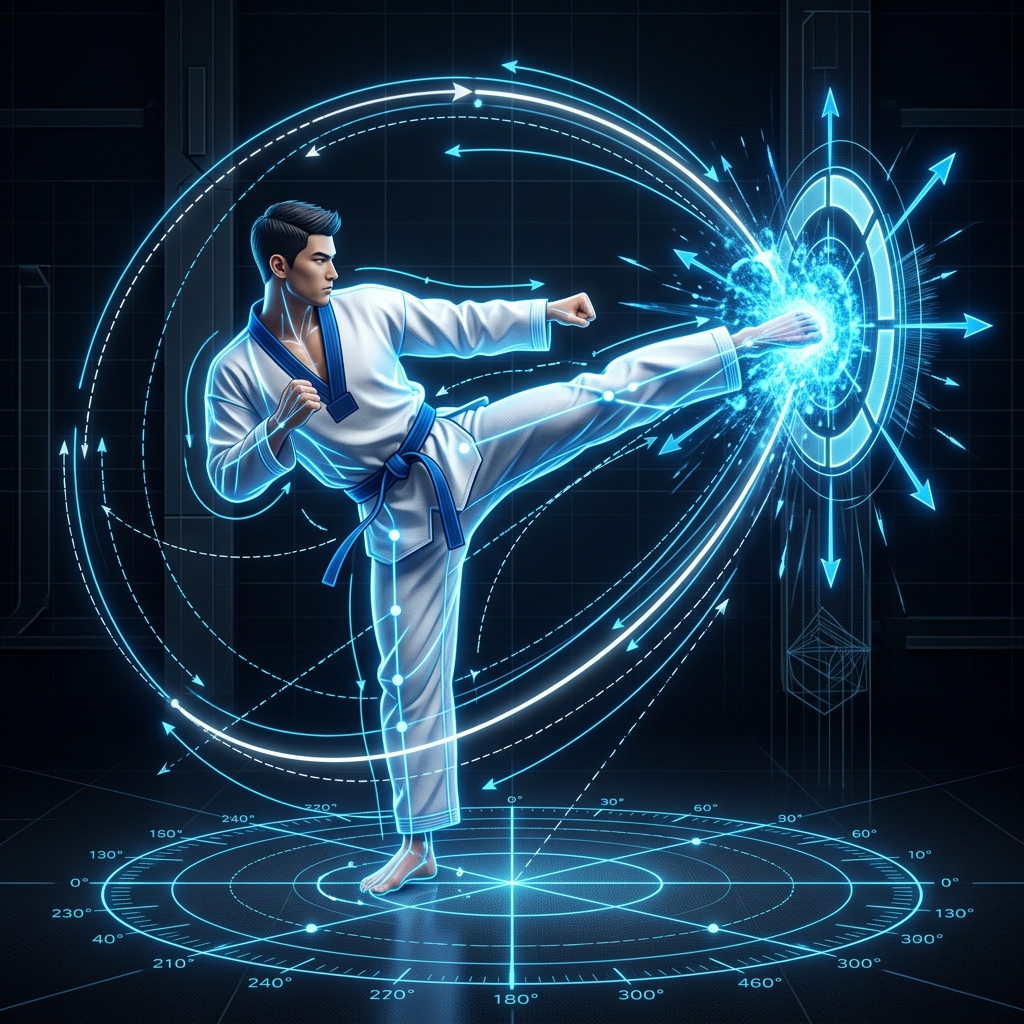
The Graveyard of Child Prodigies
It is a phenomenon observed in every national federation: an ultra-flexible 14-year-old dominates the Cadet (12-14) division with head-high side kicks, only to be completely obliterated in the first round when they transition to the Junior (15-17) division. Transitioning from Cadet to Junior Poomsae is the most brutal filtering process in the sport.
The judging criteria fundamentally shifts. What wins Cadet gold will not even pass the preliminaries in Juniors.
"Cadets are judged on their potential and flexibility. Juniors are judged as adults. They demand ruthless, combative power."
The Flexibility Trap
In the Cadet division, judges often unconsciously reward extreme hyper-mobility. A child who can kick the back of their own head is visually striking. However, this flexibility usually comes at the cost of muscular stabilization.
When that same athlete enters the Junior division, the judges stop caring about how high the kick is (as long as it meets the minimum target height) and start caring about how hard it hits the imaginary target. That hyper-mobile side kick, if it lacks the muscular tension to demonstrate explosive stopping power, will be heavily penalized in Presentation.
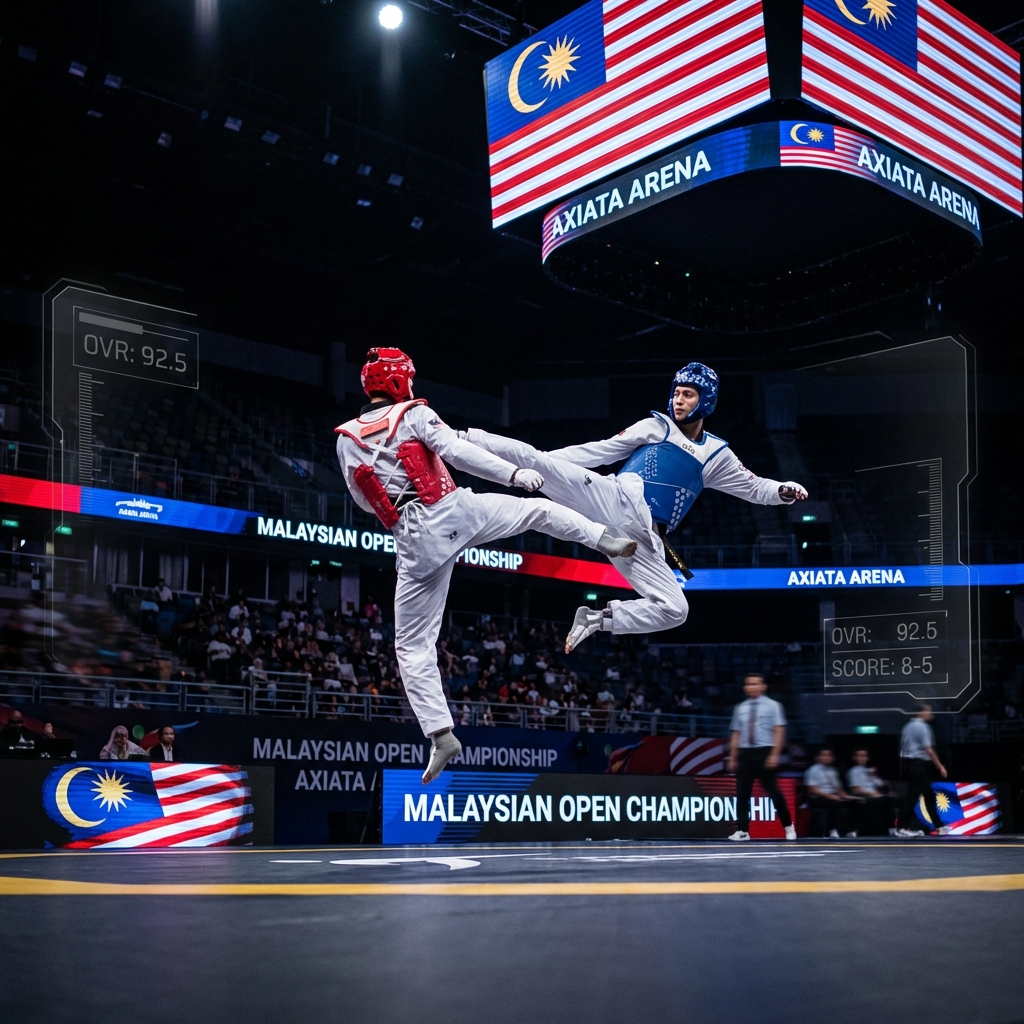
The Introduction of Advanced Black Belt Patterns
The pattern pool also changes drastically. Cadets primarily focus on the Taegeuk patterns and Keumgang. Juniors are suddenly thrust into Taebaek, Pyongwon, and Sipjin.
- Taebaek: Requires explosive, cat-like directional changes and rapid-fire double techniques that demand immense fast-twitch muscle development.
- Pyongwon: Exposes any weakness in unilateral leg strength and balance. It requires long periods of standing on one leg while executing complex, slow-motion techniques.
- Sipjin: Introduces brutal sequences of slow-tension isometric blocks. A Cadet without a developed core cannot fake the muscular shaking required to sell a 5-second slow push.
Rebuilding the Athlete for Power
Coaches must anticipate this leap at age 13. Training must pivot drastically.
Passive stretching must be replaced by active, weighted holds. Hypertrophy (muscle building) and plyometric training must be introduced safely to build the physical density required to create the 'Dobok snap' that Junior judges look for. The athlete must essentially relearn their basic blocks, transforming them from floating gestures into percussive strikes.
Conclusion
Surviving the transition to Junior Poomsae requires dismantling the flexible child champion and rebuilding them into a powerful martial artist. The athletes who successfully navigate this shift are the ones destined to dominate the Senior division for a decade.
Tactical Debrief
Share your operational insights