
The Difference Between Strength and Power
If you walk into a traditional gym, you will see athletes grinding out heavy back squats. The bar moves slowly upward. While this builds absolute strength, it lacks the defining characteristic of Kyorugi: Velocity. A Taekwondo competitor does not need to lift 400 lbs slowly; they need to move their own body weight instantaneously.
This is where Olympic Weightlifting (specifically the Clean and the Snatch variations) becomes the most critical tool in a fighter's strength and conditioning arsenal.
"A back squat is a truck. A hang clean is a Ferrari. In Taekwondo, we only race Ferraris."
The Biomechanics of the 'Triple Extension'
The core mechanic of any Olympic lift is the "Triple Extension"—the simultaneous, explosive extension of the hips, knees, and ankles. This violent upward thrust is the exact same biomechanical sequence your body uses when you jump, sprint, or push off the mat to execute a fast cut-kick.
- The Power Clean: The athlete violently pulls the barbell from the floor (or hang position) to their shoulders in a fraction of a second. The bar must move with immense speed, or the lift fails. This trains the central nervous system (CNS) to recruit fast-twitch muscle fibers on command.
- The Snatch Pull: A simplified movement where the athlete explosively pulls the bar high, emphasizing the hip thrust and shrug without the technical complexity of catching the bar overhead. It builds massive posterior chain power.
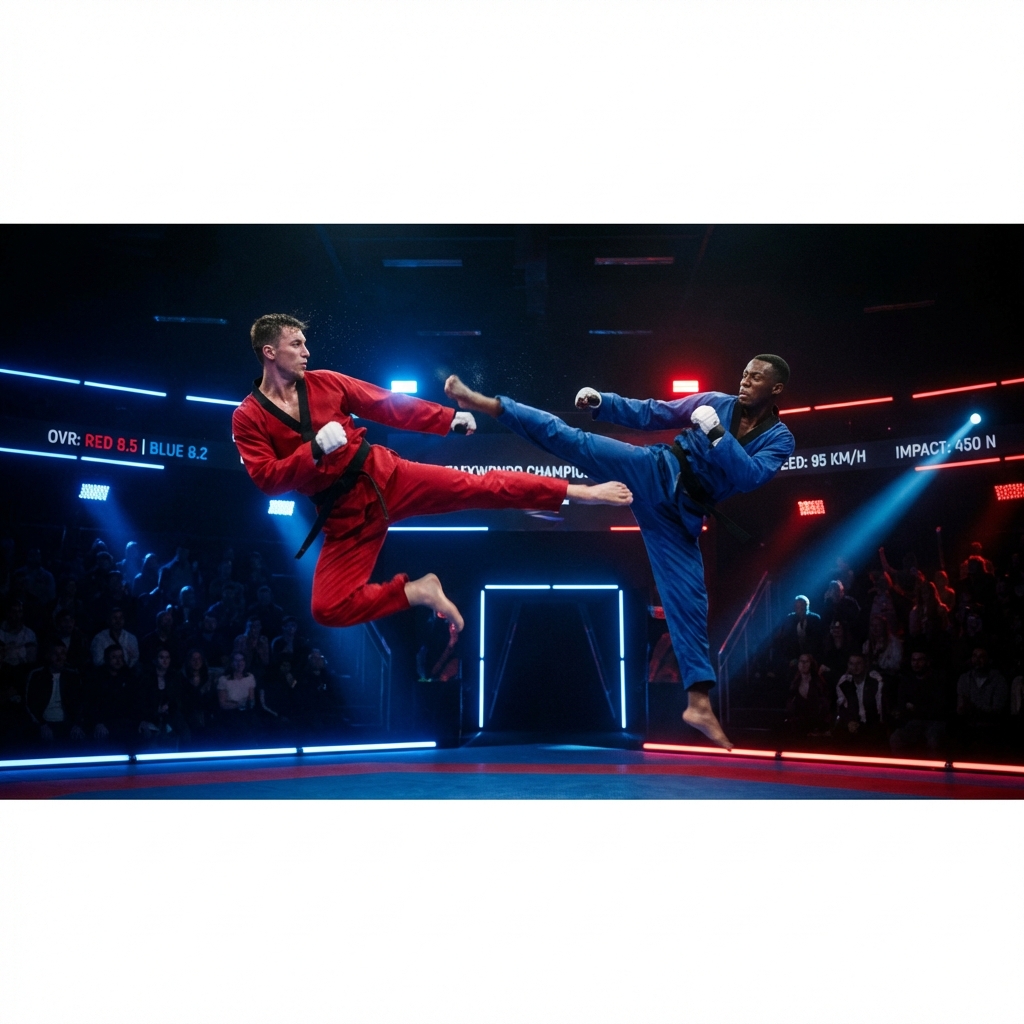
- Rate of Force Development (RFD): Olympic lifts train RFD—the speed at which you can generate your maximum strength. An athlete with high RFD does not telegraph their kicks; their foot leaves the floor entirely before the opponent's brain can process the movement.
Safety and Implementation
The danger of Olympic weightlifting lies in its steep technical learning curve. A poorly executed Power Clean will destroy your wrists and lower back.
Fighters should generally avoid the full "squat" variations of these lifts (which demand extreme mobility under heavy load) and instead focus on the "Power" or "Hang" variations. The goal is not to win a weightlifting meet; the goal is to use the barbell as a tool to train explosive hip extension. Form must always, absolutely precede weight.
Conclusion
To dominate the airspace of the octagon, your nervous system must be wired for an explosion. Replacing slow, grinding lifts with fast, violent Olympic movements will fundamentally change the velocity profile of your kicks.
Access Restricted to Master Tier
Detailed tactical metrics and high-level strategy are reserved for Master-class members. Unlock the full database to continue.
Tactical Debrief
Share your operational insights