The Birth of Active Esports
For years, "esports" meant sitting in a gaming chair with a mouse and keyboard. World Taekwondo (WT) fundamentally shattered this paradigm with the creation of Virtual Taekwondo. It is one of the only esports in the world that requires the exact same physical exertion, cardiovascular endurance, and biomechanical skill as its real-world counterpart.
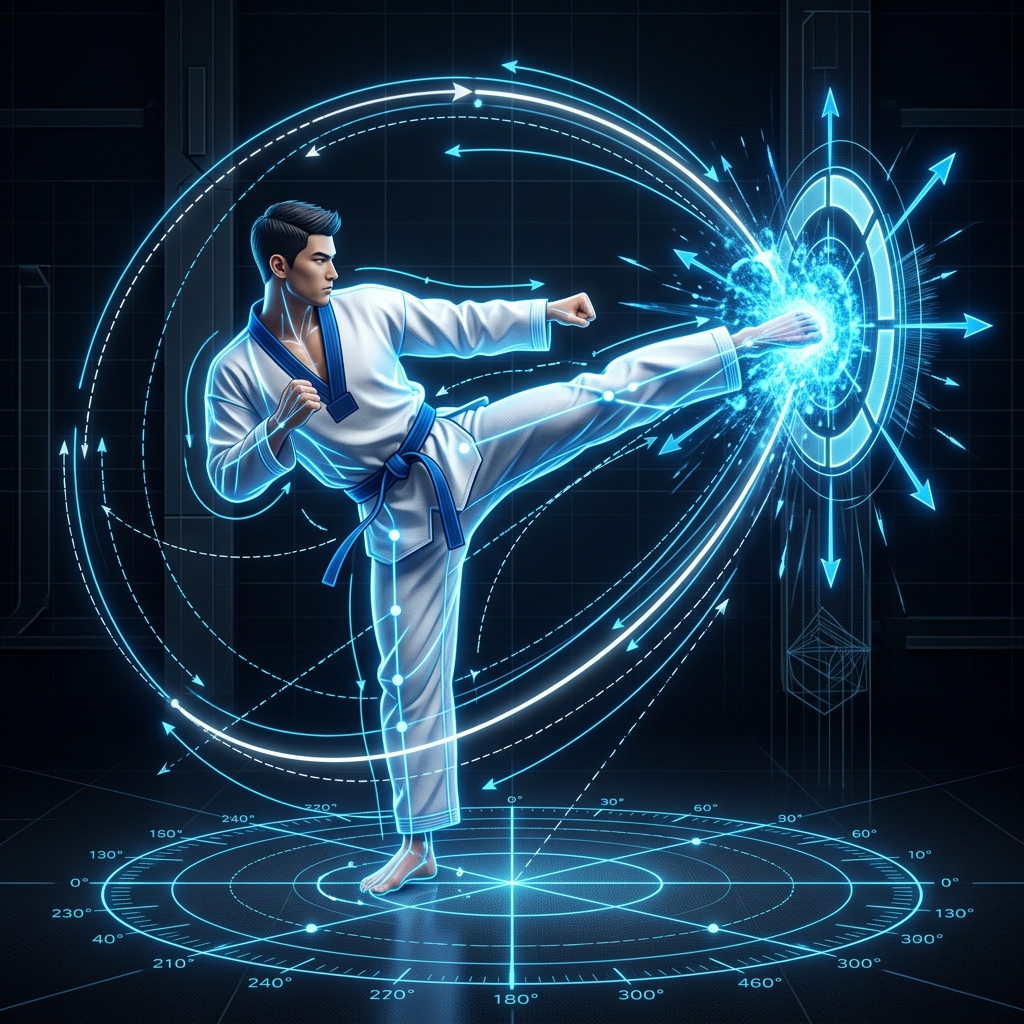
Virtual Taekwondo utilizes full-body motion tracking to map the athlete's real-world kicks onto a digital avatar in a virtual arena. The athletes wear headsets and fight an opponent who could be standing in the same room or halfway across the world.
"We are not pressing buttons to throw a kick. We are throwing the kick. The sweat is real, the lactic acid is real, and the gold medals are real."
The Milestone: Olympic Esports Series
The turning point for the sport came during the inaugural Olympic Esports Series. Unlike racing simulators or virtual cycling which require expensive stationary hardware, Virtual Taekwondo was showcased as a dynamic, free-roaming combat sport.
- No Impact, Total Combat: Because there is no physical contact between the athletes, the risk of concussions, broken bones, and joint impact trauma drops to zero. This allows athletes to throw strikes with 100% velocity without fear of causing or receiving injury.
- Leveling the Playing Field: Virtual Taekwondo relies entirely on speed, agility, and strategy rather than brute physical size. This has led to the creation of absolute open-weight categories, where a 55kg athlete can successfully fight an 80kg athlete on equal footing in the digital realm.

The Technology Stack
The current official system utilizes specialized motion-tracking nodes strapped to the athlete's ankles, knees, wrists, and head. These nodes communicate at hyper-fast frequencies to a central hub, capturing the exact angle and velocity of a kick with near-zero latency.
The athletes see the virtual arena and their opponent's avatar through a VR headset, reacting in real-time to incoming digital strikes by physically blocking or evading.
Conclusion
Virtual Taekwondo is not a replacement for traditional Kyorugi; it is a profound expansion of the martial art. By removing the barrier of physical injury and creating a globally connected arena, WT has built a bridge between traditional martial artists and the massive global gaming demographic.
Tactical Debrief
Share your operational insights