
The Flexibility Prerequisite
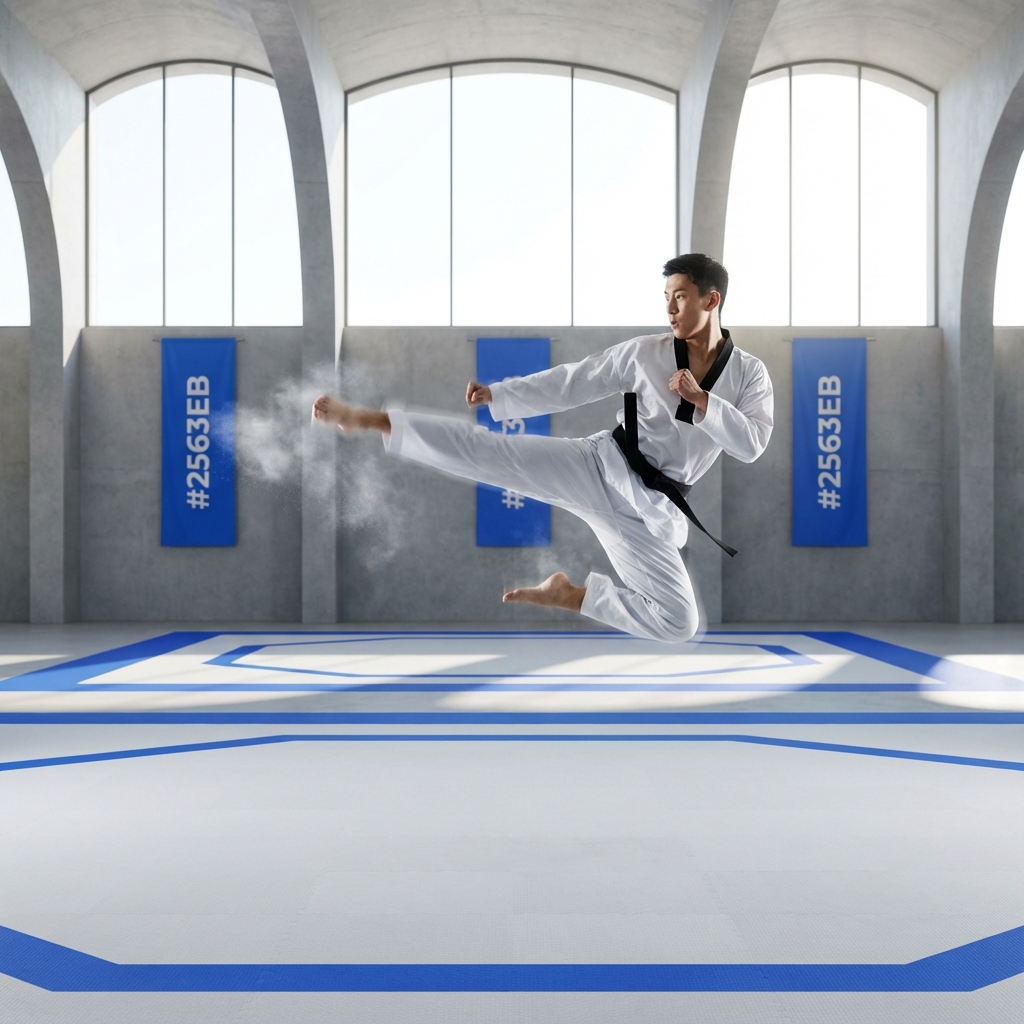
In modern Poomsae, executing a side kick (Yop Chagi) or a front kick (Ap Chagi) at chest height is a baseline requirement; executing them at head height (Olgul) is how you win medals. However, achieving cold, un-warmed-up hyper-mobility cannot be achieved through traditional, passive "sit-and-reach" stretching.
To safely unlock the extreme ranges of motion required for elite patterns, national teams utilize Proprioceptive Neuromuscular Facilitation (PNF) stretching.
"Flexibility is merely the nervous system permitting the muscle to lengthen. PNF stretching hacks the nervous system to grant that permission instantly."
Deconstructing PNF
PNF stretching was originally developed as a clinical rehabilitation technique. It involves both the stretching and contracting of the muscle group being targeted. The most common PNF method utilized in Taekwondo is the "Contract-Relax" method.
The Contract-Relax Protocol (Hamstrings Example)
- The Passive Stretch (10 seconds): The athlete lies on their back while a partner passively pushes their leg toward their chest until the first sensation of mild discomfort (the stretch reflex).
- The Isometric Contraction (6 seconds): The athlete actively pushes their leg back down against the partner's immovable resistance at about 50-70% maximal effort. The leg does not move, but the hamstring isometricly fires.
- The Deep Relaxation (2 seconds): The athlete immediately ceases pushing and completely relaxes the muscle.
- The Deeper Stretch (15 seconds): The partner safely pushes the leg further into the stretch. Because the Golgi Tendon Organ (GTO) was triggered during the isometric contraction, it inhibits the stretch reflex, allowing the muscle to lengthen significantly further than before.
The Danger of Over-Stretching
While PNF is incredibly effective for achieving quick gains in range of motion, it is highly demanding on the nervous system and connective tissue. It should never be performed cold, and it should typically only be utilized 2-3 times per week.
Furthermore, flexibility must be paired with structural strength. If an athlete uses PNF to achieve a 180-degree split but lacks the hip flexor strength to lift their leg into that position themselves (active flexibility), the passive flexibility is useless in Poomsae competition and severely increases joint instability.
Conclusion
PNF stretching is the secret weapon of the hyper-mobile elite. By understanding how to manipulate the body's autogenic inhibition reflexes, athletes can rapidly unlock the extreme kicking heights demanded by international judges.
Access Restricted to Master Tier
Detailed tactical metrics and high-level strategy are reserved for Master-class members. Unlock the full database to continue.
Tactical Debrief
Share your operational insights