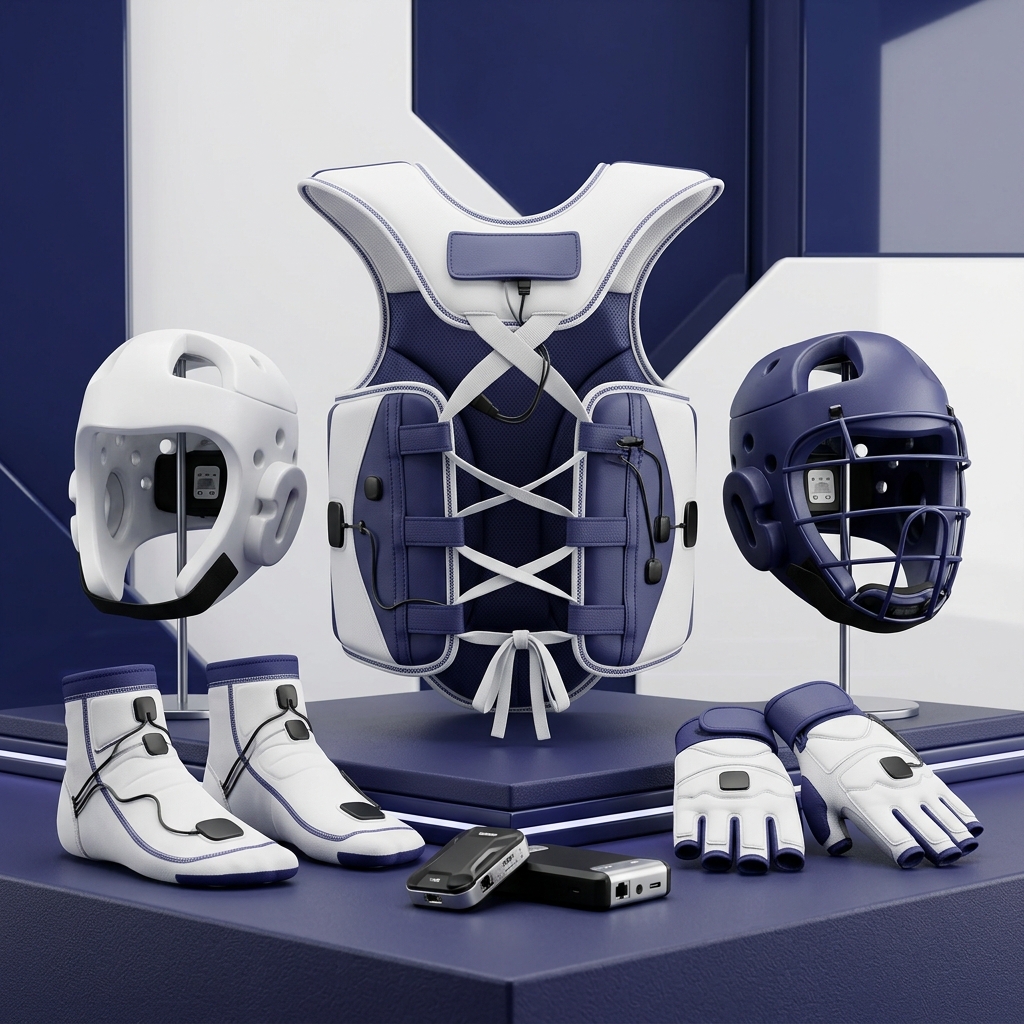
Abandoning the Camera
Early attempts at virtual martial arts relied on external optical cameras (like the Microsoft Kinect). These failed miserably in Taekwondo because during complex spinning kicks, the athlete's body would occlude (block) the foot from the camera's view, causing the digital avatar's leg to awkwardly snap or disappear.
To achieve the sub-millimeter precision required for elite competition, Virtual Taekwondo had to abandon optical tracking and move to Inertial Measurement Units (IMUs).
"We don't watch the athlete. We map their skeleton using mathematics and gravity."
The Node Network
The athlete is strapped with a network of lightweight, wireless nodes (such as the AXIS system). A standard setup involves nodes on the feet, shins, thighs, pelvis, wrists, and the VR headset acting as the master node.
- Accelerometers: Measure the explosive speed of the kick. If a kick is delivered too slowly, the software will not register it as a valid strike capable of depleting the opponent's health bar.
- Gyroscopes: Measure the rotation. When an athlete performs a 540-degree hooking kick, the gyroscopes track the exact degree of spinal and hip rotation, ensuring the avatar perfectly mirrors the complex twist.
- Magnetometers: Act as digital compasses to prevent 'drift'. By referencing the Earth's magnetic field, the nodes constantly recalibrate themselves, ensuring the avatar's foot doesn't slowly start to float away from their body over a 3-minute round.
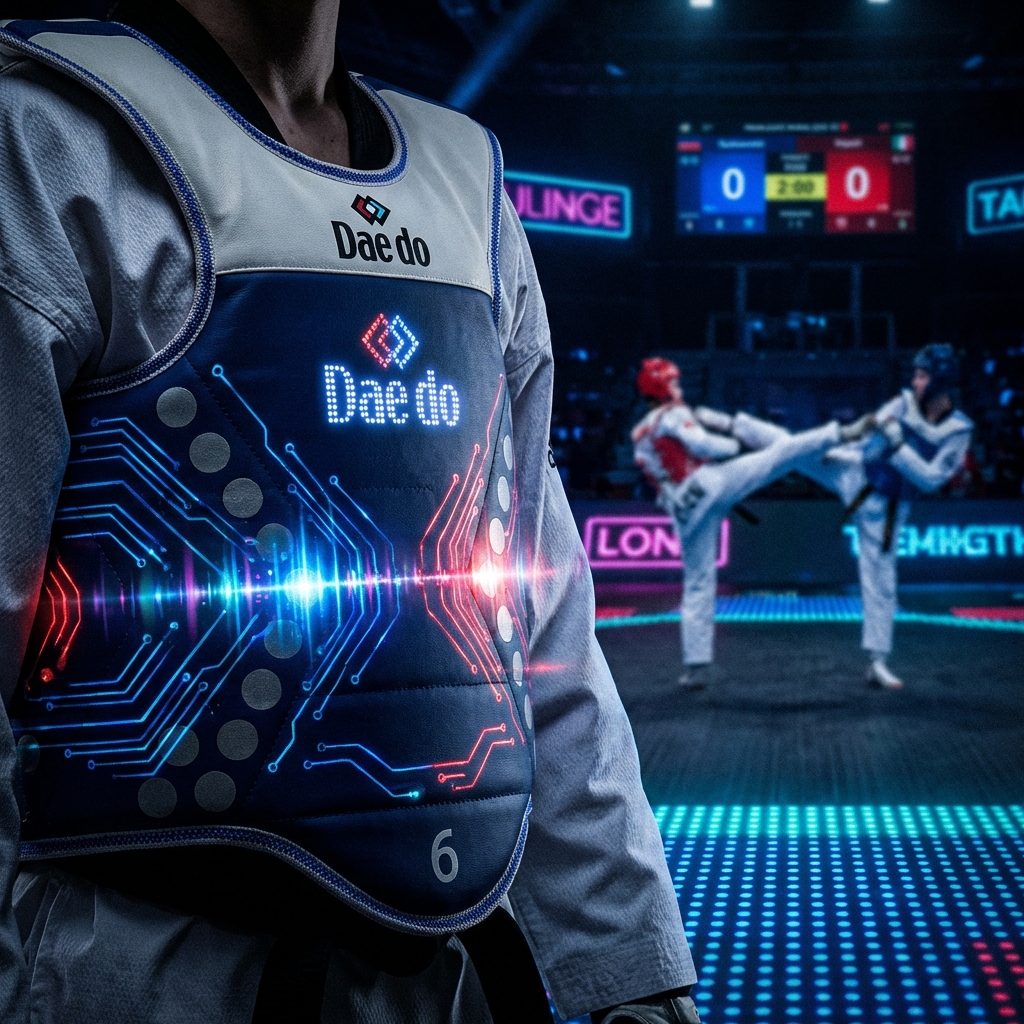
The Latency War
In a combat sport, a delay of 50 milliseconds means you get hit before you see the foot coming. The tracking nodes communicate via proprietary, hyper-optimized wireless frequencies (often bypassing standard Bluetooth) to achieve latency as low as 15ms.
This data is fed into Inverse Kinematics (IK) algorithms. The software knows the length of the athlete's femur and tibia. By tracking the pelvis and ankle nodes, the IK algorithm mathematically deduces exactly where the knee must be, rendering the avatar's leg in real-time.
Conclusion
The hardware driving Virtual Taekwondo is a marvel of biomechanical engineering. By marrying aerospace-grade gyroscopes with predictive gaming algorithms, the sport has finally achieved a 1:1 translation of human martial arts into the digital realm.
Access Restricted to Master Tier
Detailed tactical metrics and high-level strategy are reserved for Master-class members. Unlock the full database to continue.
Tactical Debrief
Share your operational insights