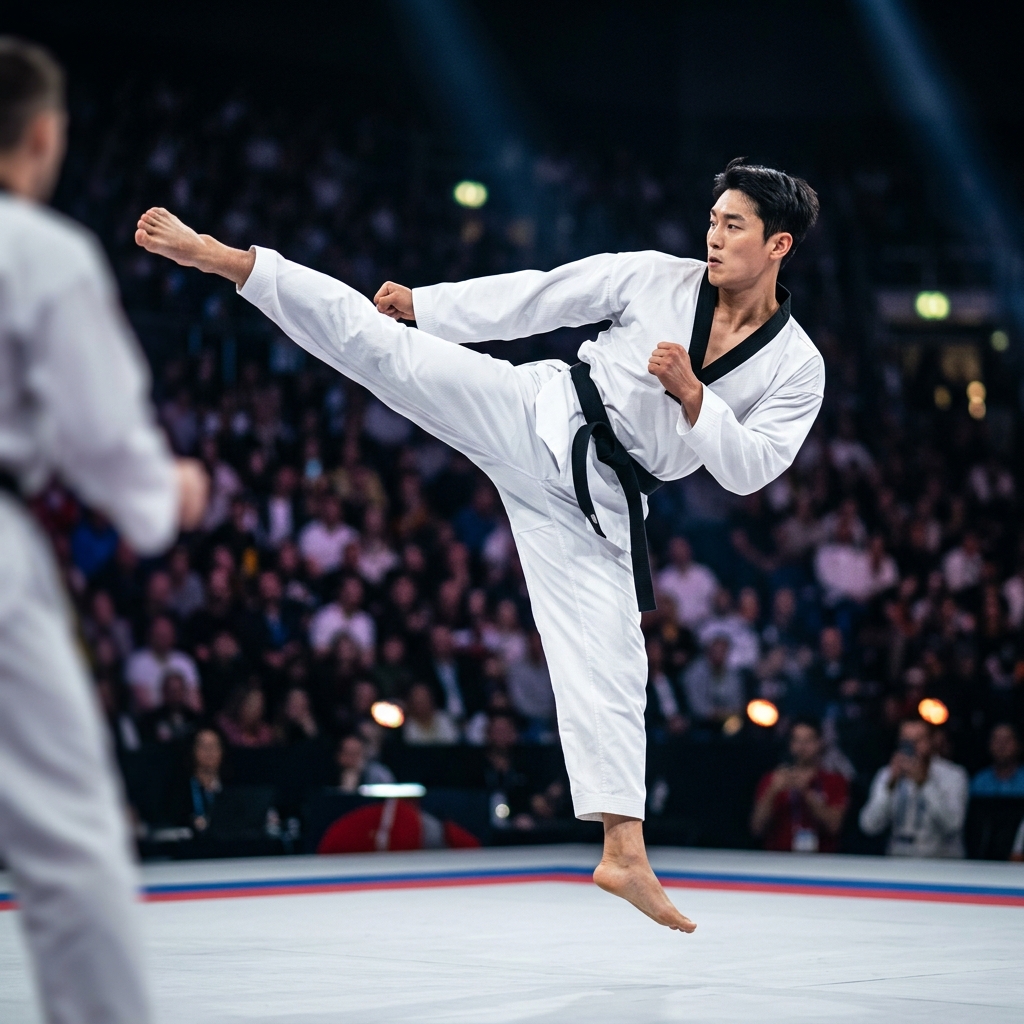
The Silk Thread
Novice athletes perform Poomsae like a robot: Block... pause... Punch... pause... Turn... pause. This produces a stuttering, staccato rhythm that judges despise. A master performs a pattern like water flowing over rocks. The secret lies in Yeon-Gye—the connection movements.
"The punch scores the Accuracy points. But what happens in the half-second *before* the punch scores the Presentation points."
Understanding the Yeon-Gye Flow
Yeon-Gye refers to sequences where two or more movements are linked without a full pause. For example, in Taegeuk 4, the double knife-hand block followed by the fingertip thrust is a Yeon-Gye sequence. The rhythm is not "One... Two." It is "One-And-Two."
- The Rebound Effect: Elite athletes do not stop the first movement completely before starting the second. They use the shockwave of the first movement's lockout to physically bounce their body into the chamber of the next technique. The physical stop of the block becomes the starting engine of the punch.
- The Breath Link: Connection movements are often linked by a single, continuous breath cycle. A sharp inhale on the chamber, a short exhale on the first strike (without fully emptying the lungs), and a massive explosive Ki-hap on the final strike of the sequence.
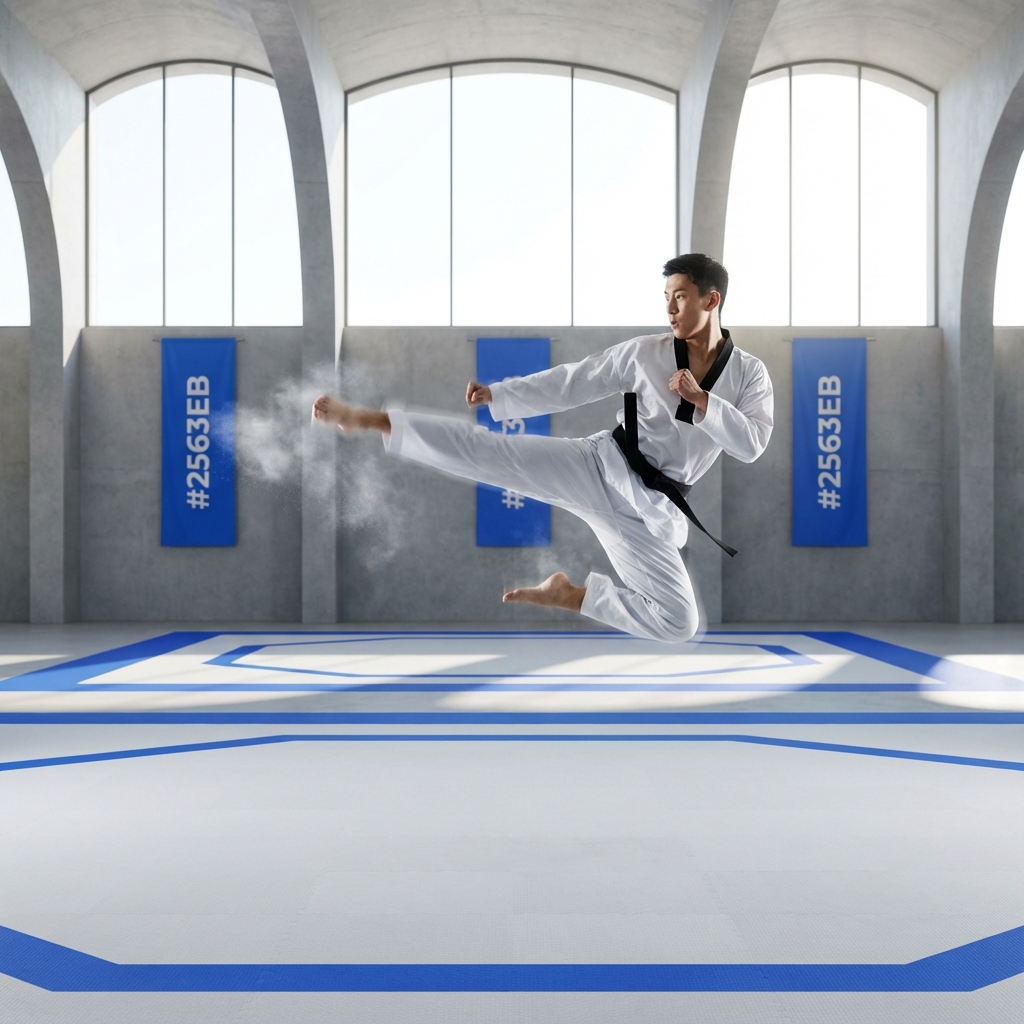
The Danger of Rushing
The biggest mistake athletes make when attempting Yeon-Gye is confusing "connection" with "rushing." If an athlete throws the fingertip thrust before the knife-hand block has achieved full structural lockout, they will receive a 0.3 technical deduction for an incomplete movement.
The lock-out of the first technique must be absolute, but it must be instantaneous. The athlete locks out for a single frame of high-speed video, and then immediately snaps into the transition. It is the mastery of this microscopic pause that separates National champions from World champions.
Conclusion
If you want to raise your Presentation score from a 5.2 to a 5.8, stop analyzing your strikes and start analyzing the empty space between them. By smoothing out the Yeon-Gye connections and utilizing rebound kinetics, your pattern will transform from a checklist of moves into a fluid, deadly dance.
Access Restricted to Master Tier
Detailed tactical metrics and high-level strategy are reserved for Master-class members. Unlock the full database to continue.
Tactical Debrief
Share your operational insights