
The Brutality of the Kal-yeo
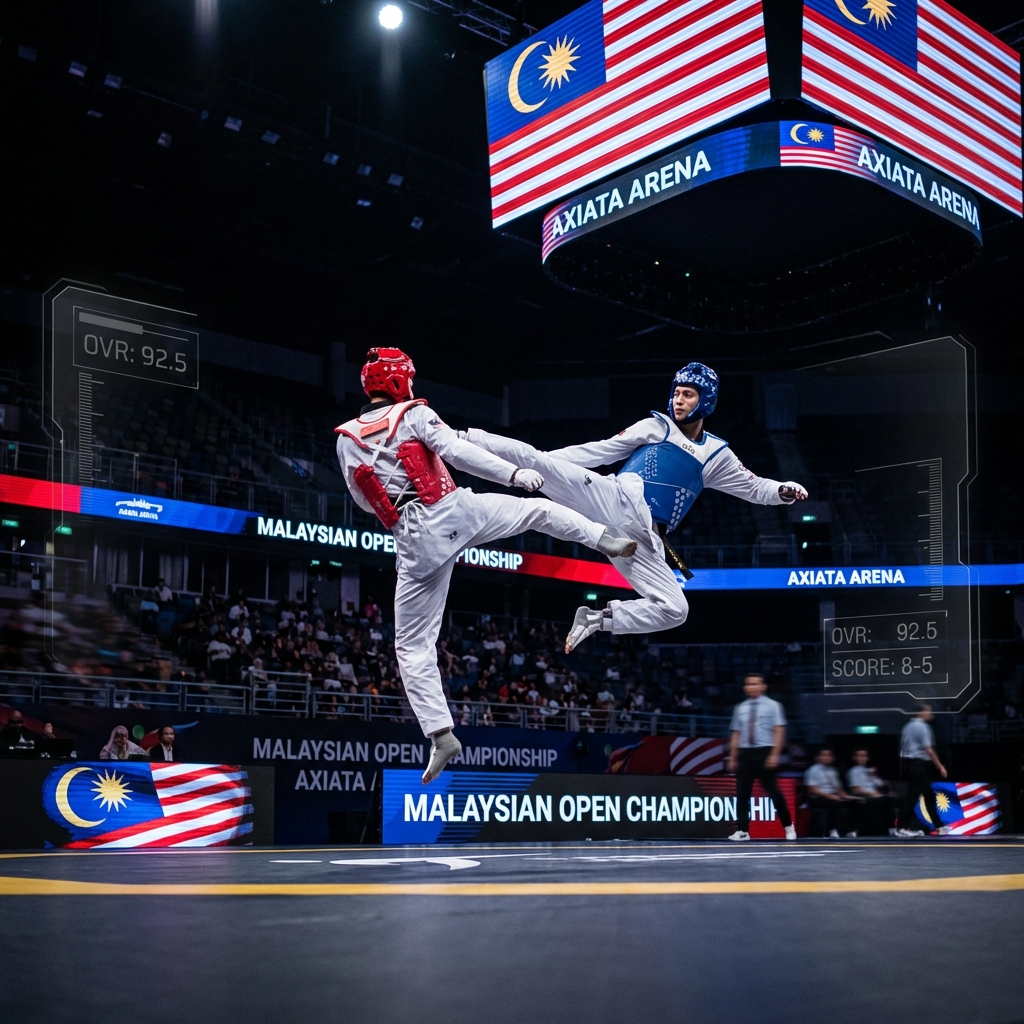
A spinning hook kick crashes flush into the side of the helmet. The athlete drops to the mat, eyes glassy, nose bleeding. The arena erupts. The center referee immediately crosses their arms, yelling "Kal-yeo!" (Break), followed by "Kyeshi!" (Suspend time). They emphatically point to the medical team.
At that exact moment, a digital 1-minute countdown clock begins ticking on the main scoreboard. This is the most intense 60 seconds in all of combat sports.
"The referee is not a doctor, but they are the final judge of an athlete's biological capacity to continue. If the blood doesn't stop, the fight stops."
The 60-Second Triage
The tournament physician sprints onto the mat with a towel and ice. They do not have time for a comprehensive medical evaluation. They are performing battlefield triage.
- Bleeding Guidelines: TheWT rules are absolute. If the bleeding cannot be completely stopped and wiped clean within the 1-minute timeframe, the referee must instantly declare the match over (Referee Stops Contest - RSC). There are no extensions. Fighters have lost World Championships because a simple nosebleed required 65 seconds to plug.
- The Concussion Protocol (The Count): If the athlete was dropped by a kick, the referee administers the 8-count before calling the doctor. If the athlete stands up at '8' but their eyes refuse to track the referee's finger, or they stumble when told to step forward, the referee will instantly wave the fight off to protect the athlete's brain, regardless of what the coach is screaming.
The Malingering Tactic (Faking it)
The most controversial aspect of the medical stoppage is athletes attempting to manipulate it. If Fighter A is exhausted and winning by 1 point with 20 seconds left, they might pretend to be injured by a light clash of knees, forcing the referee to call Kyeshi. This gives Fighter A a free 1-minute rest break.
Elite referees are highly trained to spot this "malingering." If the referee determines the athlete is faking the injury to stall the clock, the referee will immediately refuse to call the doctor, aggressively command the athlete to stand up, and issue a Gamjeom for intentionally delaying the match.
Conclusion
The Kyeshi clock is the ultimate arbiter of physical consequence. In precisely 60 seconds, a referee and a doctor must navigate the brutal intersection of athlete safety, tactical stalling, and the ruthless rules of the octagon.
Tactical Debrief
Share your operational insights