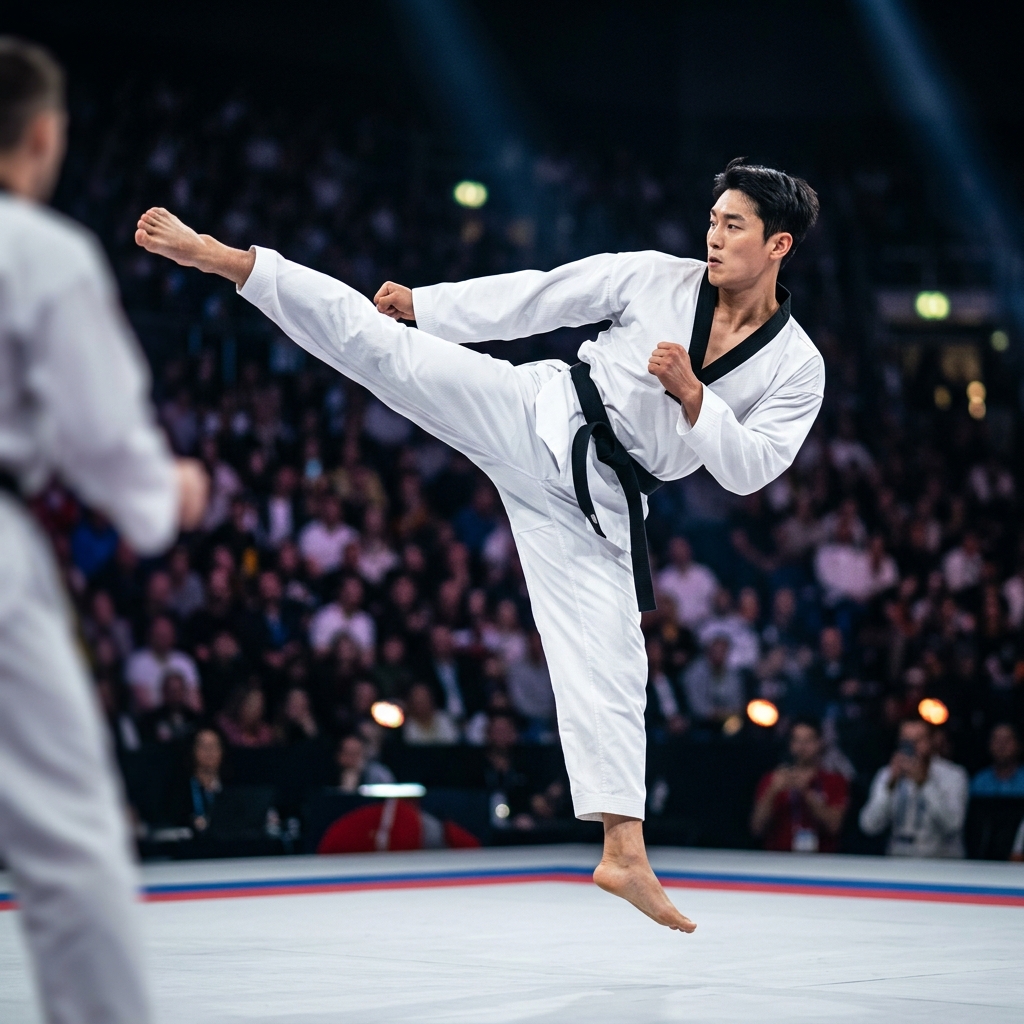
The Death of Cumulative Strategy
For decades, Taekwondo purists built careers around cumulative point leads. If an athlete secured a massive 15-point lead in the first round, they could effectively coast defensively for the remaining two rounds. The implementation of the Best-of-Three round format completely destroyed this paradigm.
Today, winning Round 1 by a score of 20-0 carries the exact same mathematical weight as winning it 1-0. Every round is a hard reset. This structural rule change forces continuous engagement and punishes the defensive, stalling tactics that previously plagued the sport.
"You are no longer fighting one match; you are fighting up to three micro-matches. Stamina and psychological resets between rounds are now the dominating factors."
Strategic Adaptations for the Modern Format
Coaches and athletes must overhaul their ring management to survive the current meta.
- The 'Throwaway' Round Strategy: If an athlete is down by a significant margin (e.g., 8-0) with only 15 seconds remaining in Round 1, elite coaches now instruct their fighters to stop attacking and conserve absolute energy for the start of Round 2. Attempting a miraculous comeback is statistically less viable than entering the next round completely fresh.
- High-Risk Closers: Conversely, if the round is tied 4-4 with 10 seconds left, athletes are heavily incentivized to throw high-risk, high-reward spinning head kicks (worth up to 5 points). Because points do not carry over, getting countered and losing the round 5-4 is no worse than losing it 9-4.
- Psychological Momentum: The psychological blow of losing a hard-fought first round is devastating. Athletes must be trained in rapid mental-reset techniques during the 1-minute rest period.

The Impact on Conditioning
Under the old rules, a dominant athlete could treat Round 3 as a victory lap. Now, if the match goes to 1-1, Round 3 becomes an absolute dogfight where both athletes must output maximum kinetic energy. Anaerobic endurance training tailored to three distinct, explosive 2-minute intervals is now the gold standard in national training centers.
Conclusion
The Best-of-Three format was designed to make Taekwondo more spectator-friendly, and it succeeded wildly. However, it requires a cerebral approach to energy management. Athletes who treat every round as a sudden-death sprint will find themselves standing on the podium.
Tactical Debrief
Share your operational insights