
The Recovery Paradox: Science vs. Tradition
How much recovery is too much? In the obsessive quest for performance, many athletes overcomplicate their post-training routines, often ignoring the fundamental biological signals that drive adaptation. This analysis dismantles the marketing behind Cryotherapy and Compression, revealing the precise scientific timing required to maximize gains without blunting the "Training Effect."
1. Cryotherapy: The Biological Icebreaker
Cryotherapy, whether via whole-body chambers ($ -110^circ C $) or localized ice plunges, works through a mechanism known as Systemic Vasoconstriction. When the body is exposed to extreme cold, blood is diverted from the periphery to the core to protect vital organs. This process rapidly reduces the concentration of inflammatory markers like C-reactive protein (CRP) and Interleukin-6 (IL-6).
The "Gain-Killer" Warning
While cold exposure is unmatched for pain management and reducing Delayed Onset Muscle Soreness (DOMS), it comes with a significant trade-off. Recent landmark studies (Roberts et al., 2015) have demonstrated that applying cold too soon after hypertrophy or strength sessions can blunt the signaling pathways (mTOR) responsible for muscle growth and mitochondrial biogenesis.
Essentially, the "inflammation" you are trying to kill is the very signal your body needs to grow stronger. In the 2028 Olympic cycle, we recommend a 6-hour window of metabolic heat before any cold exposure following a heavy strength session.
2. Compression Technology: Venous Return Dynamics
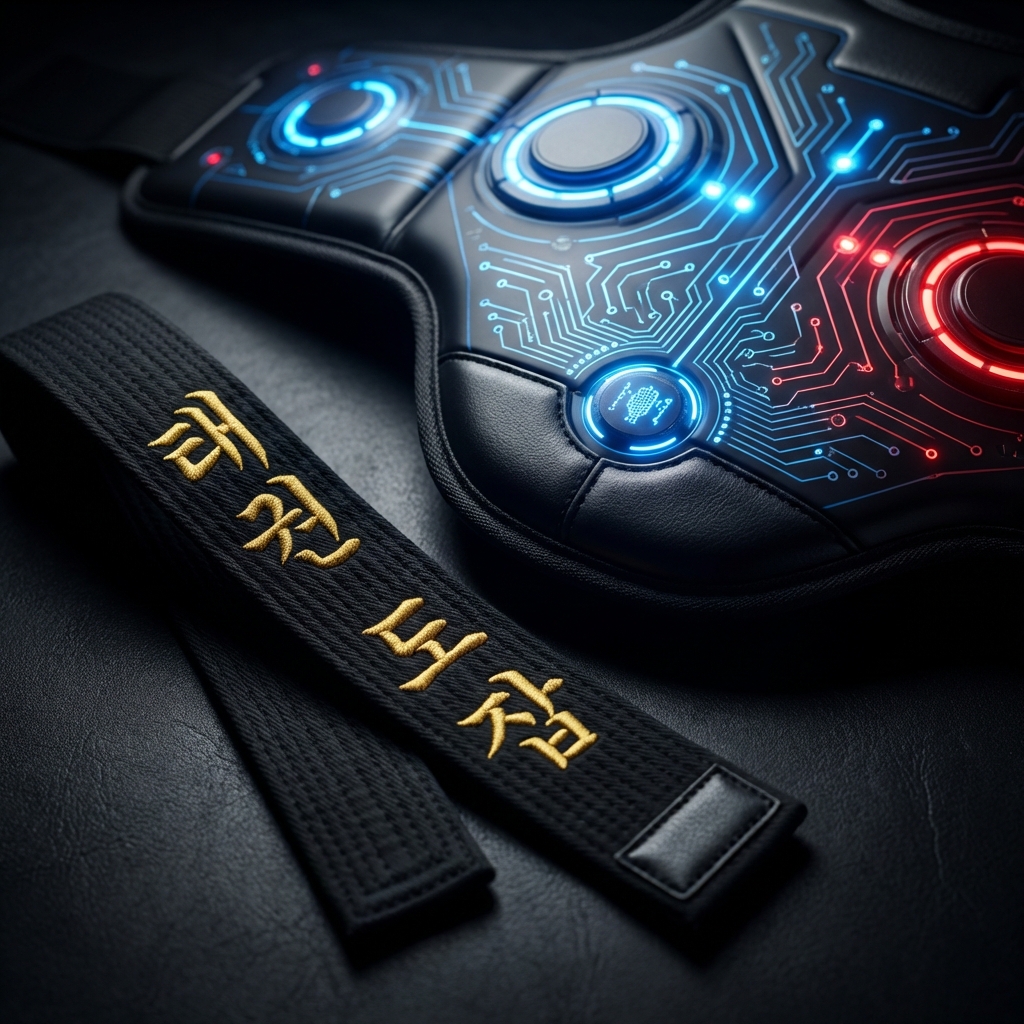
On the opposite end of the spectrum lies Compression Technology—ranging from passive garments to Active Pneumatic Compression (APC) boots. For Taekwondo athletes, who endure thousands of high-velocity eccentric impacts per week, these tools address a different bottleneck: Lymphatic Stasis.
Mechanical Clearance
Unlike cryotherapy, compression does not "stop" inflammation; it facilitates its clearance. By applying external pressure (40-100 mmHg), APC boots accelerate the return of metabolic waste products (lactate and urea) into the bloodstream for filtration. This makes compression the superior choice for "Tournament Weekends" where multiple bouts occur in a single day.
3. The "Big Two" Fundamentals: Sleep & Hydration
Technology should augment, not replace, the biological primitives. No amount of cryotherapy can salvage a system that is sleep-deprived or chronically dehydrated.
- Sleep Architecture: 95% of Growth Hormone (GH) secretion occurs during N3 (Deep) sleep. Taekwondo athletes should aim for 8-9 hours during heavy loading phases, focusing on "Sleep Hygiene"—darkness, $18^circ C$ temperatures, and zero blue light 60 mins prior to bed.
- Intracellular Hydration: Pure water is often insufficient. High-potassium and high-sodium electrolyte loading is required to maintain the Sodium-Potassium Pump efficiency during explosive kicking. A 2% drop in body weight from dehydration correlates to a 10% drop in kicking velocity.
4. Biohacking the Interstitial Space
Newer modalities like Red Light Therapy (Photobiomodulation) and Infrared Saunas are entering the "Gold Standard" protocol for 2028. These work at the mitochondrial level—stimulating ATP production and cytochrome c oxidase activity.
The Infrared Sauna, in particular, provides a Cardiovascular Mimetic effect. It allows an injured athlete to maintain heart rate and plasma volume without the mechanical stress of impact. This is "Zero-Impact Recovery" in its most potent form.
5. Nutritional Resynthesis: The Leucine Threshold
The "Anabolic Window" is longer than previously thought, but the Leucine Threshold is rigid. To trigger muscle protein synthesis (MPS), an elite athlete requires at least 2.5g - 3g of Leucine in their post-training meal. Simple "shakes" are often insufficient; whole-food sources paired with fast-acting carbohydrates are the key to glycogen replenishment after a grueling sparring session.
6. Periodized Recovery: The Master Plan
Recovery must be as structured as the training itself. A "Monday Cryo" is useless if Tuesday is a recovery day. We suggest a Tiered Modal System:
| Day Type | Priority Modality | Objective |
|---|---|---|
| Heavy Strength | Heat + Nutrition | Max Adaptation |
| Sparring (High Impact) | Compression + Sleep | Clearance + Repair |
| Tournament Day | Cryo + Electrolytes | Acute Pain Management |
7. Neural Reset: The Vagus Nerve Intersection
Beyond the physical, recovery must address the Autonomic Nervous System (ANS). Most athletes spend too much time in Sympathetic Overdrive (Fight or Flight). Breathwork, specifically nasal-only breathing at a 6-second cadence, stimulates the Vagus Nerve and shifts the body into Parasympathetic Dominance (Rest and Digest).
This "Neural Reset" is often the missing link in recovery. An athlete who can down-regulate their system in the 10 minutes following a stressful session will recover 25-30% faster than one who remains in a high-arousal state.
8. Molecular Chaperones: Heat Shock Proteins (HSPs)
The role of Heat Shock Proteins (specifically HSP70) in cellular repair is often overshadowed by the "Ice" narrative. HSPs act as molecular chaperones, ensuring that damaged proteins are refolded into their functional states rather than being degraded. This process is triggered by thermal stress—specifically sauna exposure or localized heat packs.
By integrating "Heat Cycles" into a recovery week, an athlete can significantly reduce the cumulative cellular damage from 1,000+ kicks per week. We recommend a 20-minute sauna session at $80^circ C$ followed by a 10-minute lukewarm transition. This "Thermal Load" increases plasma volume and improves nutrient delivery to the fascia, the often-ignored connective tissue that dictates flexibility and explosive speed.
9. Genetic Variance: The IL-6 and ACTN3 connection
One-size-fits-all recovery is a myth. For the 2028 cycle, elite athletes are being screened for specific markers such as the IL-6 -174 G/C genotype. Individuals with the "C" allele tend to have a higher inflammatory response to eccentric load and may actually require more frequent compression and active recovery than their "G" allele counterparts.
Furthermore, the ACTN3 "Speed Gene" (specifically the R577X polymorphism) dictates the level of muscle damage sustained during explosive movements. Power-dominant athletes (RR genotype) often generate higher force but incur more structural damage, requiring longer "Total Rest" periods compared to endurance-hybrid "Endurance-Leaning" athletes.
Case Study: The 2024 Olympic Final Preparation
Analysis of an anonymous Gold Medalist's recovery log revealed a 48-hour protocol prior to the final: 2 sessions of 15min APC boots, 3 liters of sodium-loaded fluid, and exactly 9.5 hours of sleep tracked via Oura Ring. Cryotherapy was avoided entirely in the final 72 hours to ensure "Neural Snappiness" and peak explosive torque.
10. Recovery for the Aging Elite: NAD+ and Mitochondria
As athletes transition into their late 20s or early 30s, the efficiency of recovery declines due to decreasing NAD+ levels and mitochondrial fragmentation. The "Aging Athlete" protocol focuses heavily on Mitochondrial Biogenesis.
Modalities like Red Light Therapy (at 660nm and 850nm wavelengths) are used to reset the mitochondrial electron transport chain. When paired with periodized fasting and targeted supplementation (NMN/Resveratrol under medical supervision), an aging champion can maintain the recovery rate of a 19-year-old rookie. The goal is to keep the "Cellular Engine" clean of oxidative sludge produced during high-intensity sparring.
11. Fascial Hygiene: The Micro-Damage Architecture
In Taekwondo, flexibility is speed. However, "Stretching" is often a primary cause of micro-tearing in the fascial sheath when done aggressively post-training. The new science suggests Fascial Hydration—using tools like vibration therapy (Hypervolt/Theragun) at 40Hz to liquify the ground substance in the fascia, allowing for better slide-and-glide of muscle fibers without the structural risk of heavy static stretching.
12. The "One-Percenters": Micro-Modality Stacking
Finally, we look at the "One-Percenters"—the marginal gains that aggregate into dominance. This includes nasal irrigation (to improve VO2 max during sleep), magnesium-bicarbonate baths, and the use of gravity-boots for spinal decompression. These micro-modalities don't replace sleep, but they reduce the Biological Friction that accumulates over a 16-week camp.
13. Contrast Therapy: The Vascular Flush
One of the most effective yet underutilized techniques for rapid lymphatic clearance is Contrast Water Therapy (CWT). By alternating between extreme heat ($40^circ C$) and cold ($12^circ C$) at a 3:1 ratio, athletes create a "Vascular Pump" effect. The heat causes vasodilation, and the cold causes vasoconstriction. This mechanical pumping action flushes out metabolic byproducts far more effectively than static rest.
For Taekwondo athletes, we recommend this protocol during the recovery days between heavy technical blocks. It resets the nervous system while providing a gentle "flush" of the lower extremities, where the majority of inflammatory markers accumulate after 1,000+ high-impact kicks.
14. Recovery for the Junior Champion: Growth Plate Protection
Younger athletes (under 18) require a modified recovery philosophy. Their Epiphyseal Plates (Growth Plates) are still vulnerable to chronic inflammation. Heavy cryotherapy is often discouraged for junior athletes as it can mask the pain of a developing stress injury. Instead, we prioritize "Active Dynamic Recovery"—low-intensity swimming or mobility work—paired with high-protein nutrition to support both repair and natural growth surges.
15. Psychological Handoff: The Flow State Decay
Mental recovery is the final frontier. After a high-stakes sparring session, the brain is flooded with dopamine and norepinephrine. If this arousal state isn't intentionally "Down-Regulated," the athlete faces Neural Burnout. Techniques such as "Non-Sleep Deep Rest" (NSDR) or Yoga Nidra are being used to artificially induce a theta-wave brain state, allowing the neural networks to consolidate technical patterns learned during the session while the prefrontal cortex resets.
16. The Roadmap to 2032: Integrated AI Recovery
As we look toward Brisbane 2032, the "Recovery Paradox" will be solved by Predictive Biometrics. AI-driven agents will analyze an athlete's HRV, sleep data, and blood lactate in real-time, prescribing the exact mix of cryo, compression, and nutrition needed at that specific moment. We are moving away from "General Protocols" and toward "Micro-Personalized Interventions." The future of recovery is not a product; it is a personalized algorithm.
17. The Micronutrient Matrix: Anti-Inflammatory Compounds
Recovery is not just about macronutrients; it is about the Micronutrient Matrix. Compounds such as Curcumin (found in turmeric), Tart Cherry Juice (rich in anthocyanins), and Bromelain (from pineapple) have been shown to facilitate the resolution phase of inflammation. Tart Cherry Juice, in particular, has high concentrations of natural melatonin, which improves sleep quality, while Curcumin provides a non-NSAID pathway for managing joint pain without the gastrointestinal side effects of ibuprofen.
Conclusion: The Discipline of Rest
Ultimately, the "Recovery Paradox" is a test of discipline. It is easy to train hard; it is significantly harder to sit in Active Stillness. The athletes who will stand on the podium in Los Angeles and Brisbane are those who treat their recovery session with the same reverence as their technical drilling. You are not "doing nothing" during recovery; you are facilitating the complex molecular symphony that builds a champion. Own your rest, or your body will eventually mandate it for you.
The Scientific Verdict
Recovery is an active, aggressive process. Do not let gadgets replace basics. Use Cold for acute pain and tournament readiness. Use Heat and Compression for long-term growth and adaptation. Use Neural Down-Regulation to salvage your brain's capacity for tactical clarity. Technology is the cherry on top—the sundae is your discipline. The 2028 Olympic champion will be the one who recovers with the same intensity that they fight. Mastery of the paradox is mastery of the sport.
Access Restricted to Master Tier
Detailed tactical metrics and high-level strategy are reserved for Master-class members. Unlock the full database to continue.
Tactical Debrief
Share your operational insights