The Golden Era of the KO
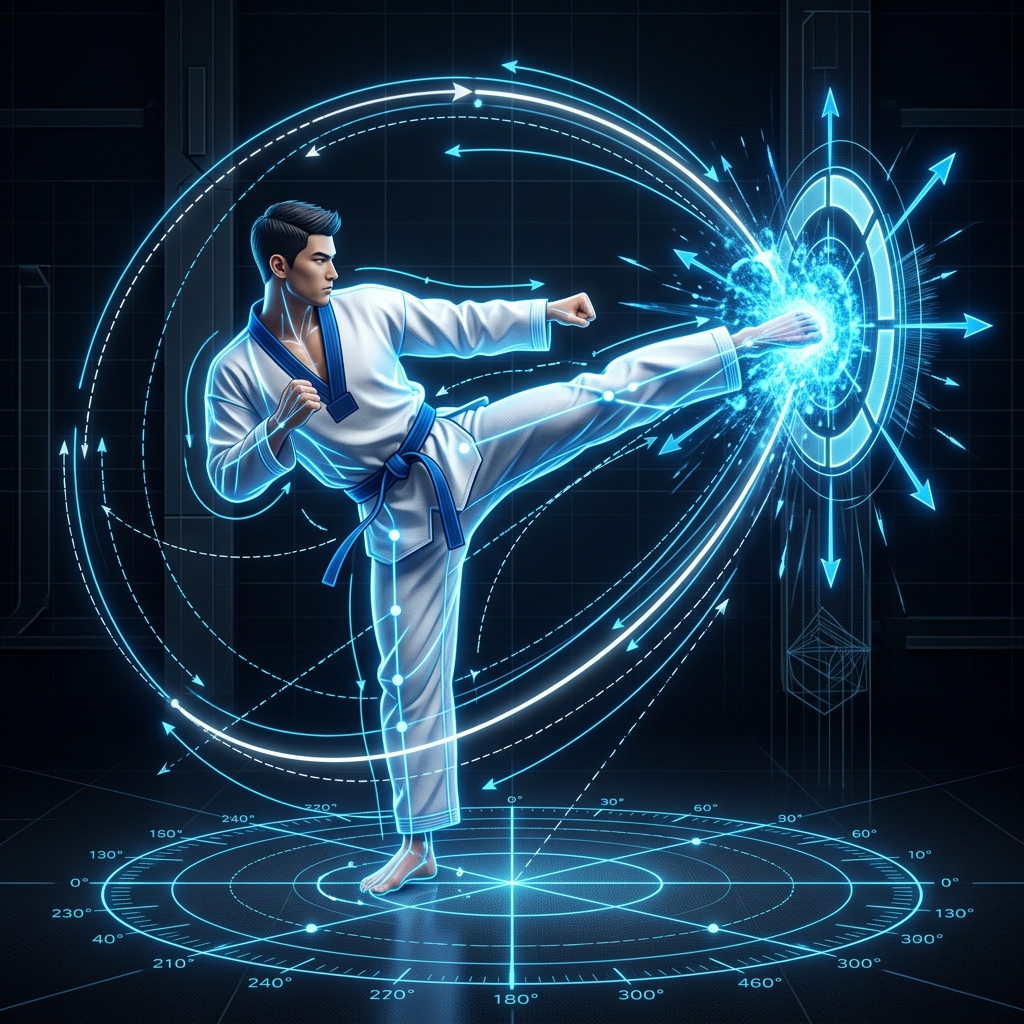
If you watch footage of the 1988 Seoul Olympics or the 2000 Sydney Olympics, you will see a fundamentally different martial art. Athletes stood in deep, grounded stances. When they threw a back kick (Dwi-Chagi), they drove their entire skeletal mass through the opponent's chest protector. Matches routinely ended in brutal, rib-cracking knockouts.
Today, those heavy, devastating kicks have largely vanished from the elite circuit. The reason is not that modern athletes are weaker; the reason is the algorithm.
"Athletes don't fight the opponent anymore; they fight the sensor threshold."
The PSS Threshold Calculation
When the electronic Protector and Scoring System (PSS) was universally adopted, it came with a mathematical threshold. For example, in the -68kg division, a kick must register an impact force of roughly 25 "PSI" to score 2 points on the body.
Elite coaches quickly realized a mathematical loophole: Why exhaust massive amounts of cardiovascular energy throwing a 100 PSI knockout kick, when a light, flicking 26 PSI cut-kick scores the exact same 2 points?
The Rise of 'Foot Fencing'
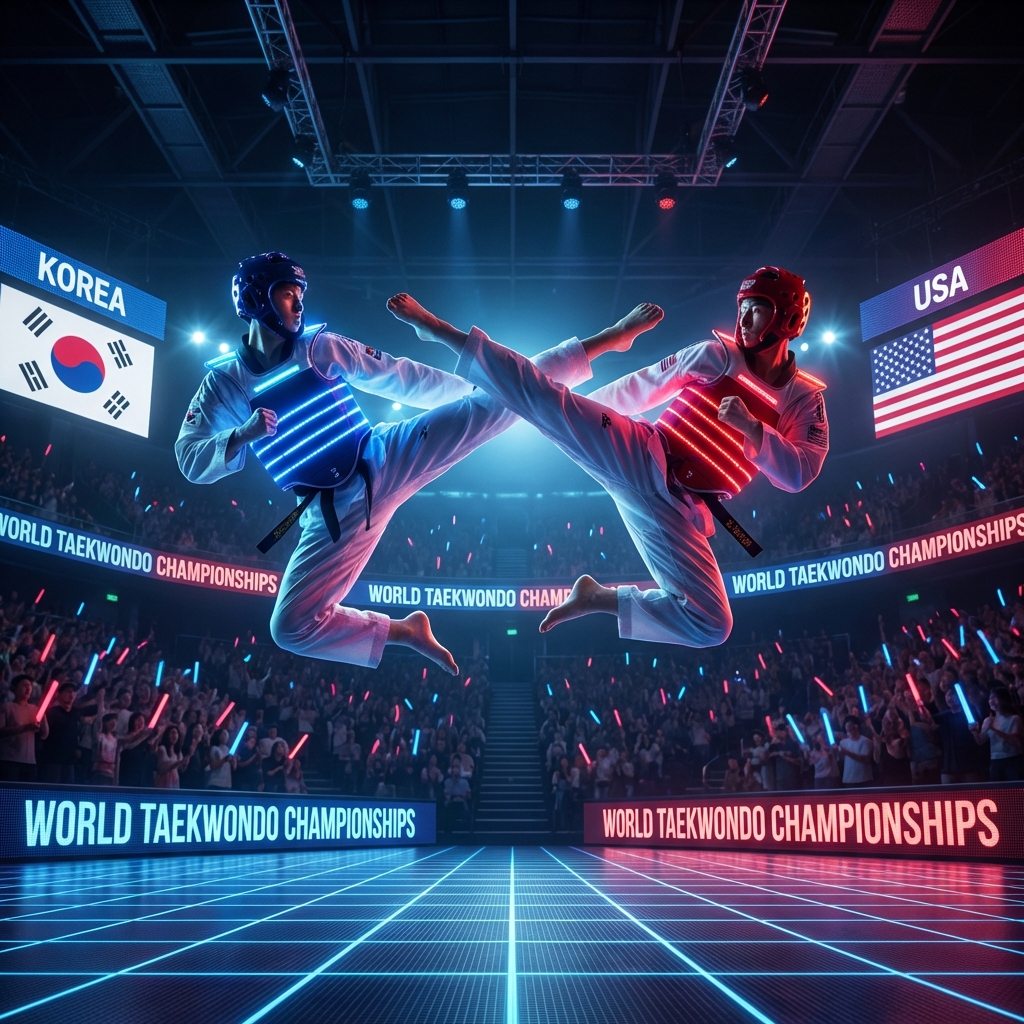
This technological reality birthed the modern meta known disparagingly as "Foot Fencing." Athletes abandoned the heavy, grounded stances of the 90s. They adopted high, bouncy stances, sacrificing all structural power to maximize their lead leg's fast-twitch dexterity.
The lead leg now hovers in the air, flicking out like a jab to tap the sensor at precisely 26 PSI over and over again. The devastating spinning hook kick, which took 1 full second to execute and frequently missed, was replaced by the 'Monkey Kick' (clinching and tapping the back of the helmet with the heel), which takes 0.2 seconds and is highly rewarded by the electronics.
Conclusion
The electronic scoring system successfully eliminated human judging bias, but in doing so, it inadvertently stripped Taekwondo of its kinetic violence. We traded the terrifying beauty of the knockout for the sterile accuracy of the algorithm. Whether this evolution saved the sport or ruined it remains the most fiercely debated topic in every Dojang worldwide.
Access Restricted to Master Tier
Detailed tactical metrics and high-level strategy are reserved for Master-class members. Unlock the full database to continue.
Tactical Debrief
Share your operational insights