The Achilles Heel of the Kicker
The Anterior Cruciate Ligament (ACL) is a thick band of tissue deep inside the knee joint that prevents the shin bone from sliding out in front of the thigh bone. It is the primary stabilizer of the human leg.
Unfortunately, the modern biomechanics of Taekwondo—rapid deceleration, violent pivoting on a planted foot, and high-impact lateral clashes—make the sport a statistical nightmare for ACL integrity. Approximately 70% of all catastrophic injuries in elite Taekwondo occur at the knee joint.
"An ACL tear rarely happens when the athlete is kicking. It almost always happens when the athlete is landing or pivoting."
The Mechanics of the Rupture
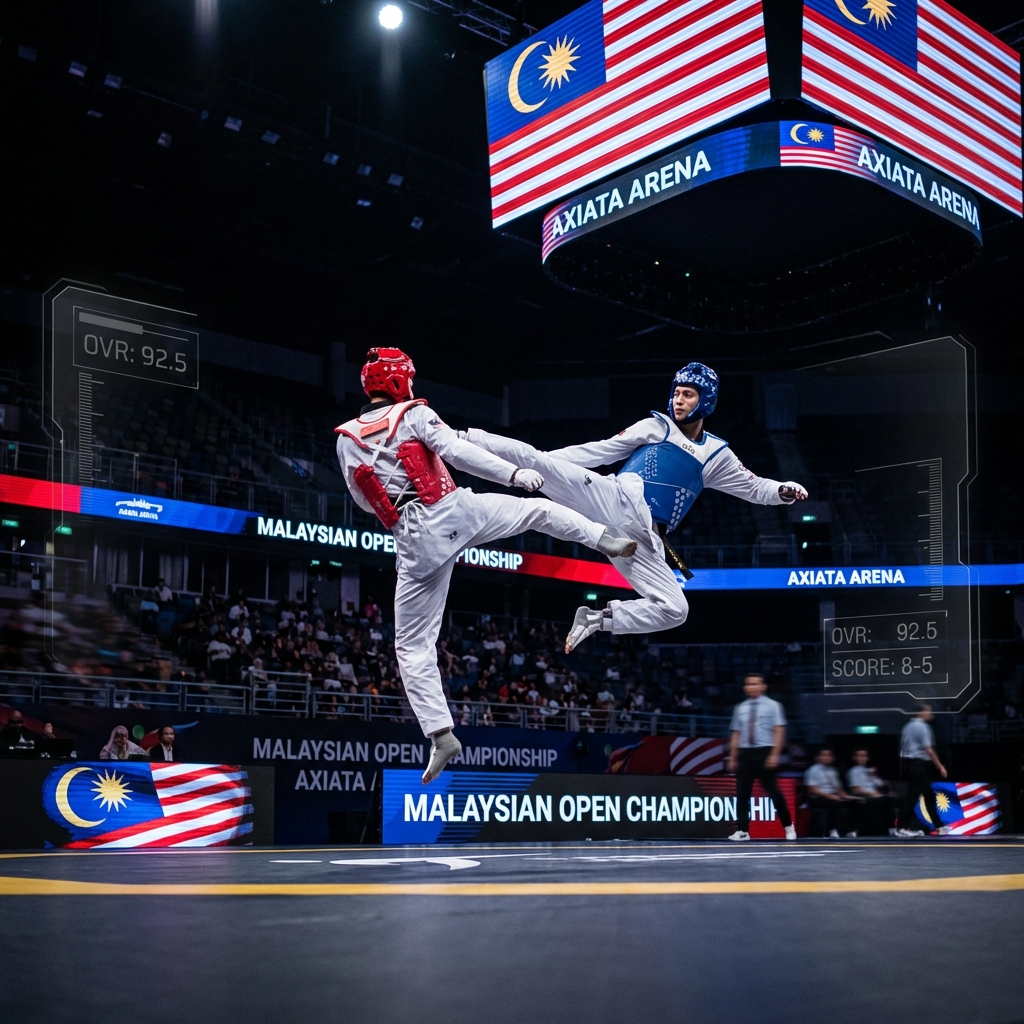
Through analyzing decades of video footage of Taekwondo injuries, sports scientists have identified the "Mechanism of Injury" (MOI) for ACL tears. It usually occurs in one of three scenarios:
- The 'Valgus' Collapse (Landing): The athlete jumps for a spin kick and lands heavily on one leg. If their hip and gluteal muscles are weak, their knee violently caves inward (toward the other leg) upon impact. This is called a "Valgus collapse." The ACL is instantly stretched beyond its tensile limit and snaps like a rubber band.
- The Plant-and-Twist (Pivoting): The athlete has their base foot firmly planted on the high-friction puzzle mat. An opponent crashes into them, forcing their upper body and hips to violently rotate, but the cleats on their base foot remain stuck to the mat. The torque shears the knee joint apart.
- The Defensive Extension (Hyper-extension): An athlete throws a front-leg cut kick, locking their knee straight out. The opponent steps into the kick, jamming the straight leg backward past 180 degrees. The ACL ruptures to prevent the knee from bending backward.
The Prevention Protocol (Pre-hab)
You cannot make the ACL itself stronger, but you can build a muscular fortress around it. Elite Dojangs mandate 15 minutes of "Pre-hab" before every sparring session.
This involves high-repetition glute-bridge exercises, lateral band walks, and single-leg landing drills on unstable surfaces (like Bosu balls). The goal is to train the neuromuscular system to instantly fire the glutes and hamstrings upon landing, preventing the knee from ever entering the dangerous "Valgus" position in the first place.
Conclusion
A surgeon can replace an ACL, but it takes 12 months of agonizing rehab to return to the mats. Proactive, targeted strength training for the posterior chain is the only insurance policy an athlete has against the surgeon's scalpel.
Access Restricted to Master Tier
Detailed tactical metrics and high-level strategy are reserved for Master-class members. Unlock the full database to continue.
Tactical Debrief
Share your operational insights