
The End of the All-Rounder
In the 1990s, a 5'9" athlete with blistering speed and knockout power could win the World Championships in the heavyweights. That era is dead. Today, elite Taekwondo is a game of ruthless skeletal mathematics. If you do not possess the precise genetic blueprint required by the electronic sensors, no amount of hard work will get you to the podium.
National Governing Bodies no longer wait for talent to walk into a Dojang. They deploy scouts to high schools, armed with measuring tapes, specifically hunting for physical anomalies.
"We don't look for kids who can kick hard. We look for kids whose femur-to-torso ratio breaks the laws of physics."
The "Slender-Man" Prototype
For the upcoming 2032 Olympic cycles, the ideal athlete profile has moved to the extreme end of the bell curve. The blueprint demands:
- The Ape Index (Wingspan): The ratio of arm span to height. Modern athletes need arms that are significantly longer than their height. This allows them to post firmly into the opponent's chest in the clinch, locking out the opponent's ability to collapse the distance, while creating just enough space to flick a head kick.
- Hyper-Flexible Hips: Scouts test the mobility of the hip socket (acetabulum) to ensure the athlete can lift their femur entirely parallel to the floor without shifting their lumbar spine. This is a genetic structural requirement for the modern "cut-kick" meta.
- The Ankle Geometry: A long, pliable Achilles tendon acts as a massive tension spring, allowing for explosive bouncing without calf fatigue. Shorter, thicker Achilles tendons (better for power lifting) are a competitive disadvantage.
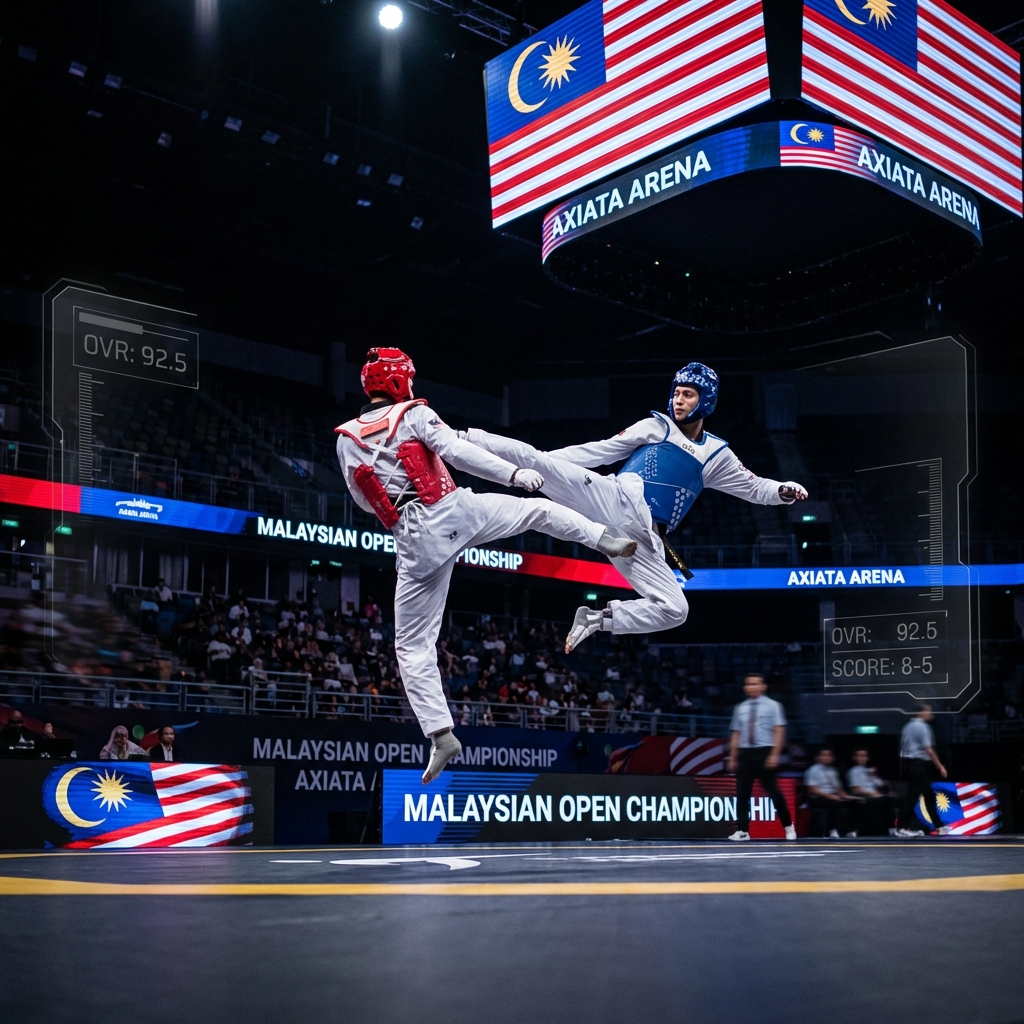
The "Draft" Method
Countries like Great Britain and Australia have pioneered the "Tall and Talented" draft programs. They find 16-year-old volleyball or track athletes who are 6'4" and weigh 140lbs, pull them out of their native sports, and teach them nothing but front-leg Taekwondo fencing for four straight years.
Conclusion
While inspiring movies tell us that heart and determination conquer all, the cold reality of the 2032 Olympics is that Taekwondo is becoming a sport exclusively reserved for hyper-specific genetic elites. The future belongs to the tall.
Access Restricted to Master Tier
Detailed tactical metrics and high-level strategy are reserved for Master-class members. Unlock the full database to continue.
Tactical Debrief
Share your operational insights