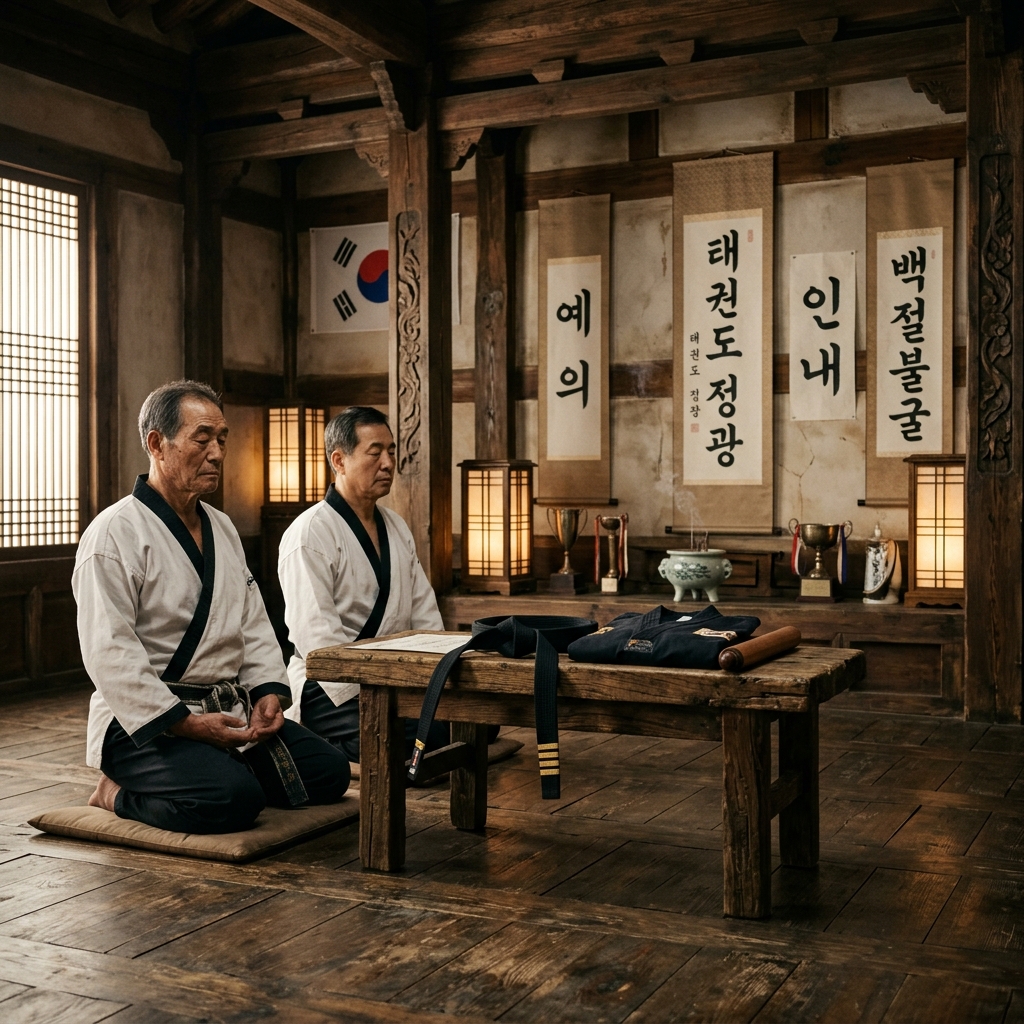
The Birthplace of Speed
While power divisions (Heavyweight and Middleweight) often see European or Iranian athletes dominating via sheer physical mass and leveraging long limbs, the Flyweight and Lightweight divisions (-58kg, -68kg) have been the historic kingdom of South Korea. The speed, tactical fluidity, and stamina displayed by Korean lightweights often resemble an entirely different sport than their heavier counterparts.
The Structural Advantage of the Korean Dojo System
To understand the dominance, one must look at the grassroots infrastructure. In South Korea, Taekwondo is seamlessly integrated into the educational system. Promising athletes are identified as early as 8 years old. By the time a Korean athlete reaches the senior national squad at 18, they have often fought over 300 official, highly competitive matches.
This massive volume of high-pressure ring experience creates what coaches call 'The Korean Eye'. Korean lightweights possess an uncanny, almost precognitive ability to judge distance and read weight transfers. They do not react to the kick; they react to the opponent's shoulder dip that happens half a second before the kick.
The 'Slide-and-Ride' Tactic
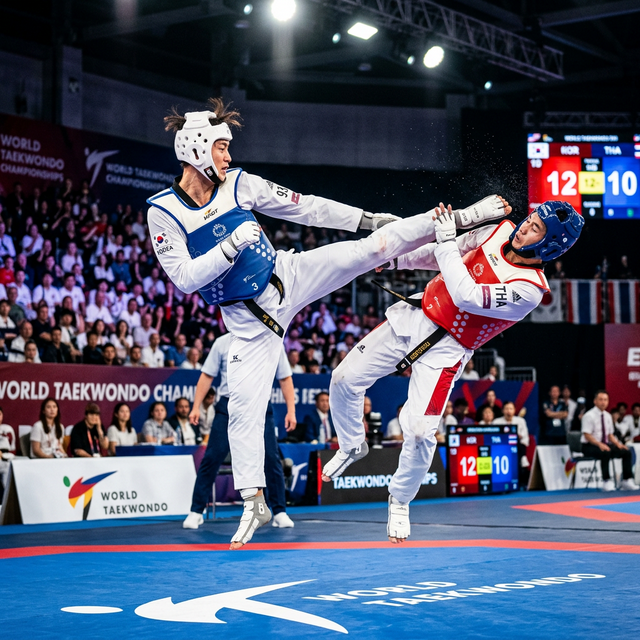
Korean lightweight strategy heavily revolves around managing momentum. Rather than meeting force with force, they utilize a masterclass in lateral sliding. When a European fighter attacks aggressively, attempting to force the Korean out of the octagon, the Korean fighter will employ the 'slide-and-ride'.
As the opponent closes the distance, the Korean athlete will step backward on an angle, perfectly matching the speed of the incoming attack. They stay exactly 2 inches outside the opponent's striking range. By 'riding' the opponent's aggressive momentum backward, they wait for the opponent to overextend their base stance. The moment the opponent's front foot lands heavily, structurally momentarily freezing them, the Korean fires the counter-roundhouse to the exposed torso.
Leg Dexterity and the Inside Game
Another hallmark of Korean lightweights like Park Tae-Joon is unprecedented leg dexterity. While many athletes possess flexible hips to kick high, the Korean squads train extreme flexibility in the knee flexors and ankles.
This allows them to throw 'flick' kicks—snapping the foot up to the opponent's headgear with virtually no hip chamber, striking at odd, almost impossible angles from within the clinch. This is frequently done by twisting the ankle outward immediately after missing a body shot, leveraging the leg up the opponent's chest shield to graze the jaw.
Conclusion
The dominance of South Korea in the lightweight brackets is not an accident of genetics. It is the result of a meticulously structured national pipeline that emphasizes thousands of hours of sparring experience before puberty, resulting in athletes who manipulate tempo and distance like chess grandmasters.
Tactical Debrief
Share your operational insights