The Brutal Reality of the Final Round
Anyone can look like a champion for the first two minutes of a Kyorugi match. The muscles are fresh with glycogen, the central nervous system is firing rapid twitch responses, and the adrenaline masks the impact of incoming strikes. But Taekwondo is structurally designed to exhaust the human body at an unprecedented rate.
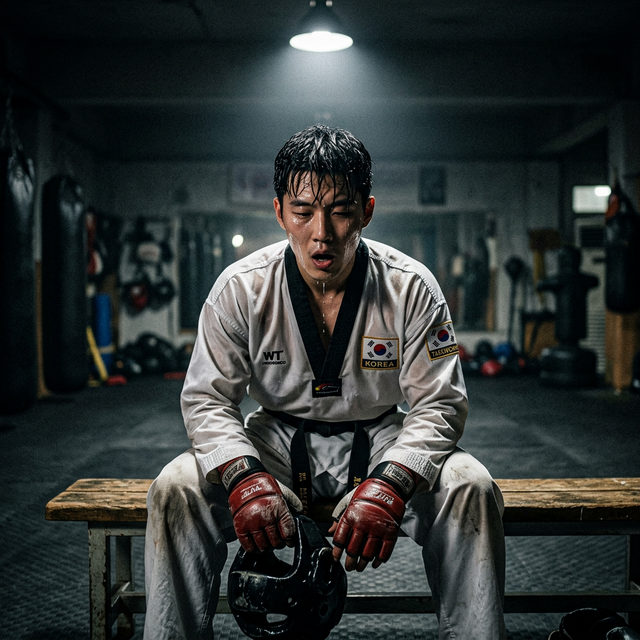
Throwing multiple high-velocity, chambered leg extensions while wearing several kilograms of protective armor, and aggressively bouncing on the balls of your feet, drains cardiovascular reserves exponentially faster than boxing or wrestling. By the middle of the third round, the athletes are not breathing; they are drowning.
Understanding Lactic Acid Accumulation
During the explosive bursts of energy required to execute a combination kick, the body relies on anaerobic glycolysis. This process breaks down glucose for immediate energy without oxygen. The byproduct of this emergency energy system is lactic acid.
When lactic acid accumulates in the quadriceps and calves faster than the bloodstream can clear it, the pH level of the muscle drops dramatically. This acidity literally inhibits muscle contraction. That feeling of 'heavy legs' or 'cement shoes' in the third round isn't just mental fatigue—it is a physiological chemical barrier clamping down on the muscle fibers.
Training the Threshold
You cannot stop the production of lactic acid. However, you can train the body to clear it more efficiently, and train the mind to operate effectively while saturated in it. This is known as Lactate Threshold Training.
The 30-Second Sprint Protocol
Traditional distance running (like a 5km jog) does virtually nothing for a Taekwondo athlete's lactate threshold because it utilizes the aerobic, rather than anaerobic, system. To build combat stamina, you must simulate the match structure.
- The Setup: The athlete stands before a heavy bag.
- The Sprint: For exactly 30 seconds, the athlete must throw continuous, alternating roundhouse kicks (Dollyo Chagi) into the bag at maximum velocity with zero rest.
- The Active Recovery: After 30 seconds, the athlete does not sit down. They must bounce in a combat stance for 15 seconds.
- The Repetition: Repeat this cycle 10 times.
The Mental Component: Digging Deep
When the legs flood with acid, the athlete's technical mechanics break down. The chamber drops, kicks lose their snap, and the guard lowers. Threshold training forces the athlete to experience this physiological collapse in the gym, teaching them to manually override the pain signals.
Elite South Korean squads are legendary for their third-round endurance. This is not due to genetic superiority. It is because their daily training involves "burnout rounds" where athletes are forced to spar fresh opponents only after their legs have been chemically exhausted via plyometrics. The champion is the athlete whose form deteriorates the least when the acid burns the most.
Access Restricted to Master Tier
Detailed tactical metrics and high-level strategy are reserved for Master-class members. Unlock the full database to continue.
Tactical Debrief
Share your operational insights