The Birth of the Shield
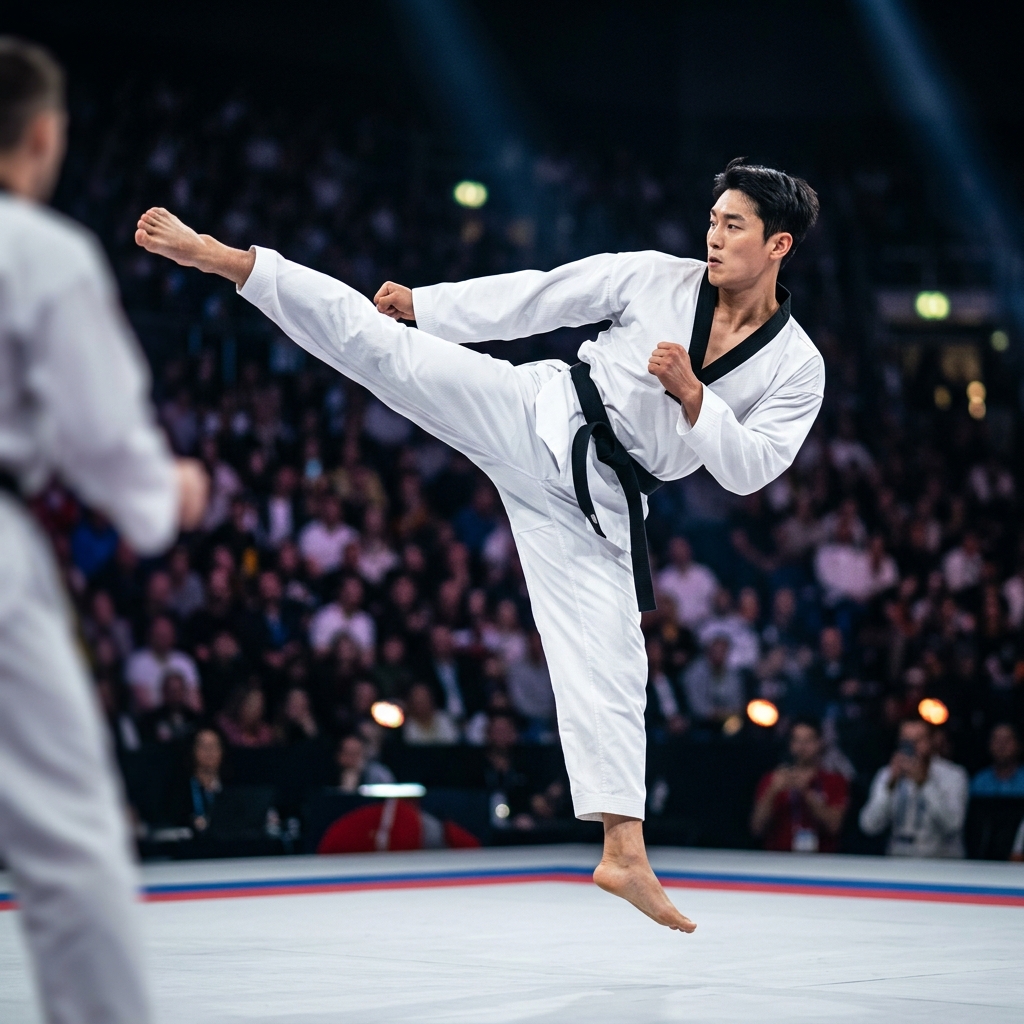
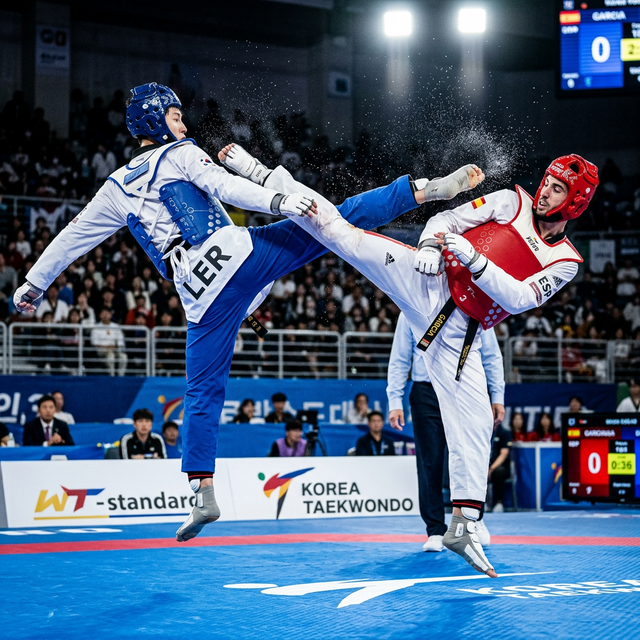
To understand the current state of elite Taekwondo, one must understand the absolute dominance of the 'Cut-Kick'. Born directly from the integration of the electronic Protective Scoring System (PSS), the cut-kick began purely as an exploitation of the rules. Athletes realized that turning sideways, lifting their front leg horizontally, and aiming the bottom of their foot directly at the opponent functioned as an impenetrable physical barrier.
If an opponent attempted to rush in with a powerful roundhouse, they would impale themselves on the lifted leg. Furthermore, slight tapping motions with that lifted foot against the opponent's electronic Hogu would routinely score points. It was incredibly safe, highly frustrating for spectators, and heavily dominated the 2016 Olympic cycle.
The Rules Change: Limiting the Hover
Recognizing that the sport was stagnating into a bizarre, single-legged hopping contest, World Taekwondo (WT) aggressively altered the penalty rules. Referees were instructed to issue immediate Gam-jeoms (penalties) for athletes who hovered their leg in the air for more than a few seconds without executing a recognizable strike, or for kicking below the belt line to disrupt the knee.
This mandate forced the cut-kick to evolve. It could no longer be used as a lazy, passive shield. It had to become an active, dynamic weapon or a highly specific, momentary framing tool.
The Offensive Cut-Kick: The Piston
The modern offensive cut-kick resembles a stiff jab in boxing. It is utilized to aggressively assert dominance in the Red Zone (striking distance). By exploding forward off the rear leg while simultaneously thrusting the front leg straight into the opponent's chest protector, an athlete achieves two things:
- Immediate Point Attempts: A direct, hard thrust with the heel frequently registers enough pressure to score on the modern PSS systems.
- Structural Disruption: A heavy cut-kick violently shoves the opponent backward, breaking their athletic stance and making them momentarily incapable of launching a counter-attack.
The Setup for the 'Double-Touch'
The most advanced evolution is using the cut-kick simply as a misdirection mechanism. An elite fighter will execute a low-power cut-kick to the opponent's torso. The opponent instinctively drops their hands slightly to block the incoming leg pressure.
In a fraction of a second, without dropping the kicking foot to the floor, the offensive athlete aggressively snaps the knee upwards, converting the cut-kick into a devastating, blindingly fast question-mark kick or high crescent kick directly to the face. This 'double-touch' methodology relies entirely on the opponent wrongly assuming the cut-kick is the final intended action.
Conclusion
The cut-kick has transitioned from a maligned loophole to a foundational pillar of modern striking. It serves as a shield, a battering ram, and a complex decoy. Coaches who refuse to teach the proper biomechanics of lifting and thrusting the front leg due to 'traditionalist pride' are effectively crippling their athletes before they ever step onto the mat.
Tactical Debrief
Share your operational insights