The IOC's Digital Mandate
The International Olympic Committee (IOC) is facing a demographic crisis. The traditional television audience for massive global sporting events is aging out, while the younger, Gen-Z and Gen-Alpha demographics are heavily ingrained in the digital and e-sports ecosystems, largely ignoring legacy athletic broadcasts. To survive the next fifty years, the IOC initiated 'Olympic Agenda 2020+5', a massive strategic roadmap demanding the deeper integration of digital technologies and e-sports into the Olympic framework.
World Taekwondo (WT) recognized this mandate earlier than almost any other international federation. By championing Virtual Taekwondo (VTKD) as an official, sanctioned branch of its governing body, WT has explicitly positioned itself as the pioneer of the hybrid physical-digital sport.
The Stepping Stones to Brisbane 2032
Becoming an Olympic medal event is an excruciatingly bureaucratic and political process. It requires proven global adoption, standardized hardware protocols, and high demographic viewership. The roadmap for VTKD is already brutally apparent:
- 2023: The Olympic Esports Series (Singapore). This was the initial Proof of Concept. The IOC observed the viability of motion-tracked martial arts on a global stage.
- 2024: Paris Olympics Showcase. The sport was heavily featured as a demonstration event alongside the physical Kyorugi matches, exposing traditional viewers to the digital format.
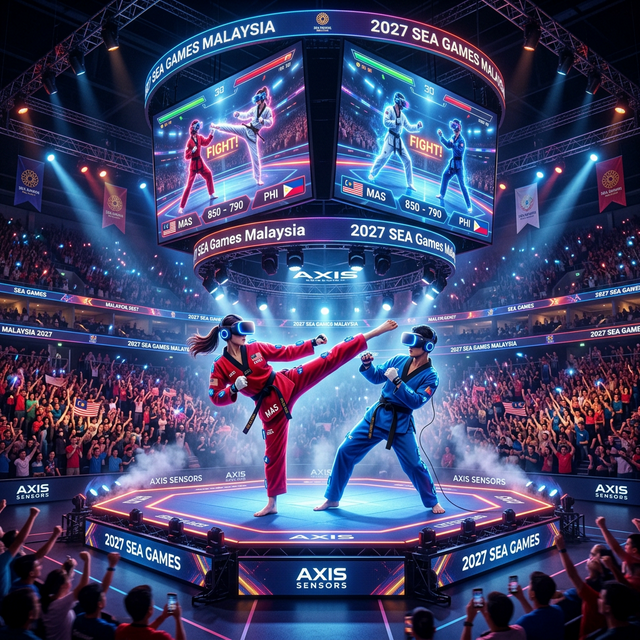
- 2027: The SEA Games (Malaysia). This is the critical transition from 'exhibition' to 'Medal Event'. Being a recognized medal sport in a massive regional event validates its competitive integrity.
- 2032: The Brisbane Olympic Games. The ultimate objective. If the 2027 showing succeeds in driving massive digital viewership, VTKD could perfectly slide into the Brisbane roster as the flagship event of the IOC's new e-sports Olympic integration.
Why Virtual Taekwondo Over League of Legends?
A massive hurdle for integrating traditional e-sports (like League of Legends, CS:GO, or Valorant) into the actual Olympics is the lack of physical exertion and the overwhelming presence of simulated violence (guns, blood). The core Olympic charter demands physical excellence.
Virtual Taekwondo solves this fundamental dilemma. It is a 'Virtual Sport', not just an 'E-Sport'. It requires the exact same cardiovascular capacity, muscular flexibility, and physical biomechanics as a legitimate physical combat sport. It perfectly satisfies the Olympic requirement for athletic excellence while simultaneously satisfying the desperate need for digital, gamified engagement.
The Infrastructure Challenges Remaining
However, the road to 2032 is not guaranteed. To achieve Olympic status, the underlying technology must become drastically cheaper and universally accessible. Currently, the AXIS tracking nodes and required VR computational power are extremely expensive, gatekeeping developing nations from creating robust grassroots programs.
If World Taekwondo can successfully subsidize and democratize the hardware across Africa, South America, and Southeast Asia, ensuring equal competitive footing independent of national GDP, Virtual Taekwondo will undeniably secure its place on the Olympic podium.
Tactical Debrief
Share your operational insights